Buying Land in Tampa Bay for Custom Home: Key Steps
October 5, 2026 · 14 min read
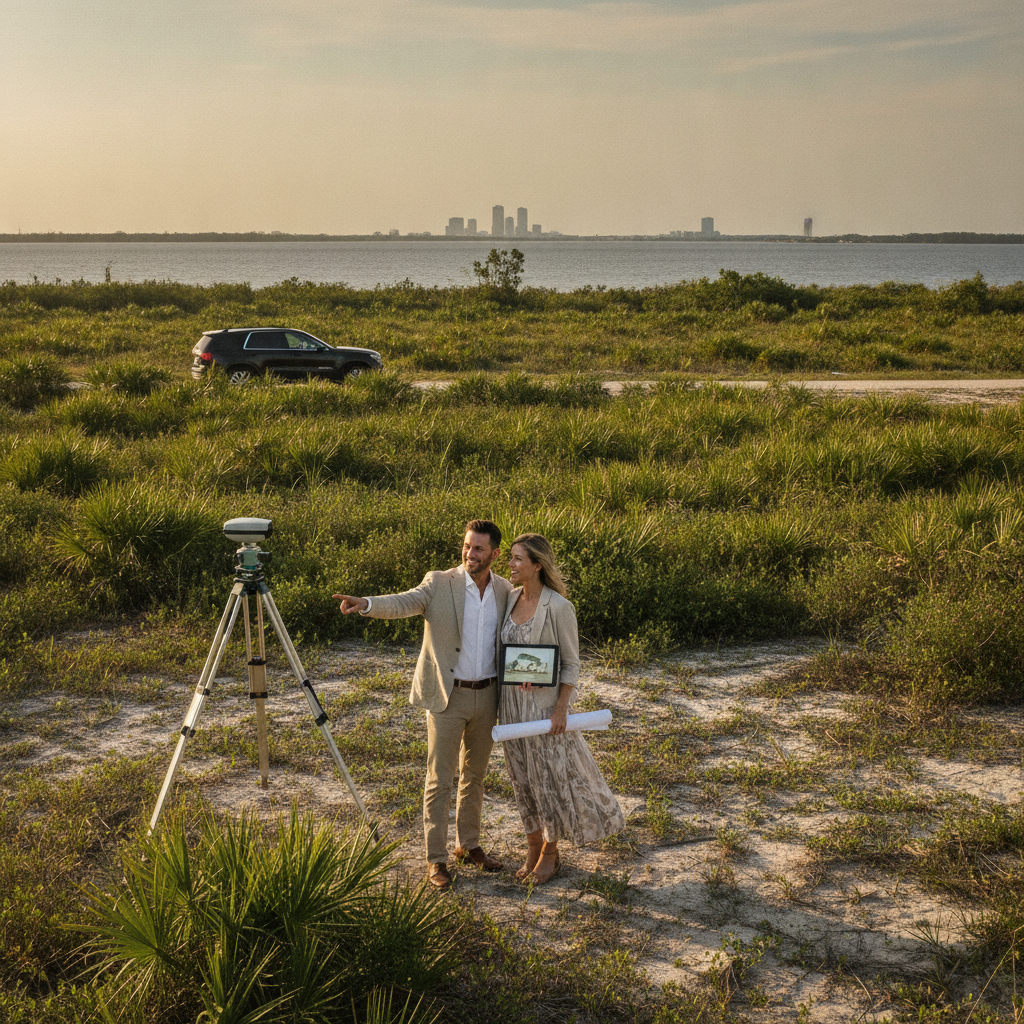
Buying land in Tampa Bay for custom home construction is one of the most consequential real estate decisions a buyer can make in this market — and one of the least understood. Unlike purchasing a finished house, where price, condition, and comparables are visible from day one, land carries hidden variables: flood zone status, soil conditions, utility access, zoning restrictions, and permitting timelines that can add tens of thousands of dollars before a foundation is ever poured. This guide breaks down the process the way an experienced land developer approaches it, so buyers across Hillsborough, Pinellas, Pasco, and Manatee counties can avoid the mistakes that turn a 'bargain' lot into a budget disaster.
TL;DR — The Bottom Line
Buying land in Tampa Bay for custom home projects requires more than comparing price per acre. Zoning confirmation, flood-zone status, soil conditions, utility access, and impact fees can add tens of thousands of dollars to a project before construction even begins. With Tampa's 2026 market cooling — median list prices down roughly 6% year over year and homes sitting on the market longer — buyers have more negotiating leverage, but also more responsibility to vet a lot thoroughly before making an offer.
Quick Facts
- Tampa median list price (Aug 2026): $390,000, down 6.0% year over year
- Tampa median sale price (Aug 2026): $377,500, down 0.4% year over year
- Average days on market: 74 days, with roughly 25.5% of listings price-reduced
- Key counties for land buyers: Hillsborough, Pinellas, Pasco, and Manatee
- Common hidden costs: flood compliance, fill/grading, utility extension, impact fees, stormwater management
What Buying Land in Tampa Bay for Custom Home Projects Really Involves
Buying land in Tampa Bay for custom home construction gives buyers a level of control that resale shopping simply can't match — you choose the site, the orientation, the floor plan, and the finish level. But a land purchase functions as its own transaction, with a different due-diligence process than buying a finished house. A home inspection can reveal most issues with an existing property in a single day; land due diligence, by contrast, involves surveys, flood studies, soil tests, utility confirmations, and zoning verification that can take several weeks to complete properly.
Before writing an offer, buyers should define a 'buildable program' — a written description of the home, garage, pool, and outdoor space they intend to build, along with a target construction budget and timeline. Without this framework, it's nearly impossible to judge whether a specific parcel actually supports the house you have in mind. A half-acre lot zoned for residential use might look generous until setbacks, a required stormwater retention area, and a septic field eliminate most of the usable building envelope.
Understanding Tampa Bay's Fragmented Land Market
'Tampa Bay' is not one market — it's a patchwork of counties and municipalities, each with its own zoning code, permitting office, and review timeline. Buying land in Tampa Bay for custom home projects means understanding exactly which jurisdiction governs a given parcel, because rules can change at a county or city line even when the street address looks nearly identical.
| Area | Typical Land Character | Regulatory Note |
|---|---|---|
| Hillsborough County (Tampa, Brandon, Riverview, Apollo Beach, Lutz) | Mix of infill lots and suburban-edge acreage | City of Tampa has separate zoning/permitting from unincorporated county |
| Pinellas County (St. Petersburg, Clearwater, Largo, Palm Harbor) | Dense, largely built-out; infill and teardown lots common | Coastal/flood overlays common near barrier islands |
| Pasco County (Wesley Chapel, Land O' Lakes, Trinity) | More raw acreage and newer platted subdivisions | Faster-growing permitting queues; concurrency and impact fees vary |
| Manatee County (Bradenton, Lakewood Ranch) | Larger lots, master-planned communities | HOA and master-developer design review layered on top of county code |
According to Realtor.com's August 2026 housing data, the Tampa metro's median list price was $390,000, down 6.0% year over year, with listings averaging 74 days on market and roughly 25.5% carrying a price reduction. Homes.com reported a slightly different figure — a $377,500 median sale price, down 0.4% year over year, with about 20,276 homes for sale, a 7.5% annual decline. Redfin's trailing three-month figure through August 2026 was notably higher, at $479,000, with homes selling in an average of 46 days. These numbers vary because each source uses different geography, timing, and methodology — which is exactly why buyers evaluating land in Tampa Bay for custom home purchases should treat any single 'Tampa median' as a directional signal, not an appraisal of a specific lot.
The Developer's Due-Diligence Checklist Before You Buy
Experienced developers never make an offer on raw land without a documented feasibility process. The same discipline protects an individual buyer buying land in Tampa Bay for custom home purposes.
- Define the buildable program. Document square footage, bedroom count, garage size, pool, and any accessory structures before shopping for lots.
- Confirm zoning in writing. Request written confirmation from the governing planning department on permitted use, setbacks, height limits, lot coverage, and parking standards.
- Order a boundary and topographic survey. This identifies actual lot lines, easements, and elevation changes that affect buildability.
- Check flood zone and base flood elevation. FEMA flood maps and local elevation certificates determine whether fill, piers, or elevated construction will be required.
- Verify utility access. Confirm whether public water, sewer, electric, and reclaimed water lines reach the lot, or whether well and septic systems are required.
- Assess soil conditions. A geotechnical report flags sinkhole risk, soft soils, or high water tables that can significantly increase foundation costs.
- Estimate impact and permitting fees. Each county and city assesses different impact fees for schools, roads, parks, and utilities.
- Review HOA, deed restrictions, and overlay districts. Coastal, historic, and conservation overlays can limit height, materials, or square footage beyond standard zoning.
A: A survey, flood determination, soil test, and zoning confirmation typically take two to six weeks to complete, depending on county processing times and whether wetlands or environmental review is required. Buyers should negotiate a due-diligence period in the purchase contract that reflects this timeline rather than the shorter inspection periods common for finished homes.
Zoning, Setbacks, and Flood Compliance: The Hidden Cost Drivers
Buying land in Tampa Bay for custom home projects requires confirming, in writing, the minimum front, side, and rear setbacks; maximum building height; impervious-surface or lot-coverage percentage; and parking requirements for the specific zoning district — not just the general residential classification shown on a county GIS map.
Flood compliance is arguably the biggest wildcard. Much of Pinellas County's coastline, large portions of South Tampa and Apollo Beach, and numerous low-lying pockets throughout Hillsborough and Pasco counties fall within FEMA Special Flood Hazard Areas. A lot's base flood elevation determines whether a home must be elevated on fill, piers, or a stem-wall foundation — and each option carries a dramatically different cost. Raising a slab-on-grade foundation by two or three feet of compacted fill can add tens of thousands of dollars to site work alone, while pier or piling foundations required in coastal high-hazard areas can cost significantly more than conventional construction.
Stormwater management adds another layer. Most Tampa Bay jurisdictions require on-site retention of a certain volume of rainfall, particularly for lots that increase impervious surface area. On a tight infill lot, the retention pond, swale, or underground vault needed to meet these requirements can consume a meaningful share of an already-small buildable envelope.
A: No. Flood insurance requirements depend on whether the parcel sits within a FEMA-designated Special Flood Hazard Area and whether the home is financed with a federally backed mortgage. Even outside mapped flood zones, however, Tampa Bay's flat topography and tropical storm exposure make flood insurance a prudent purchase for most custom-home owners regardless of zone designation.
Utilities, Site Work, and Impact Fees: Budgeting Beyond the Purchase Price
Once zoning and flood questions are resolved, the next major cost driver in buying land in Tampa Bay for custom home construction is getting the lot ready to build on. 'Site work' covers clearing, grading, fill, drainage, driveway construction, and the extension of utilities to the building envelope — and it varies enormously from lot to lot.
- Distance from the property line to the nearest water and sewer connection, and the estimated extension or tap-in cost
- Whether the parcel requires a private well and septic system, and whether soil conditions support a standard septic field or require an engineered alternative
- Electric service availability and whether overhead-to-underground conversion or transformer upgrades are needed
- Reclaimed water availability for irrigation, which affects long-term landscaping costs
Impact fees are a separate, often underestimated cost. Hillsborough, Pinellas, Pasco, and Manatee counties each assess impact fees for roads, schools, parks, and public safety on new residential construction, and municipal jurisdictions within those counties may layer on additional fees. These fees are typically due at permitting, not at closing on the land, so they should be included in the construction budget rather than the land budget. Depending on the jurisdiction and home size, total impact and permitting fees for a custom home can run from several thousand to well over $20,000.
Financing a Land Purchase for a Custom Home in Tampa Bay
Financing a raw land purchase works differently than financing a finished home, and this is a step many first-time buyers underestimate. Few conventional mortgage lenders will finance vacant land the same way they finance an existing house; most require a larger down payment — often 20% to 50% — and shorter loan terms, reflecting the higher risk lenders associate with undeveloped property.
Buyers planning on buying land in Tampa Bay for custom home construction generally choose among a few paths:
- Land loan followed by a separate construction loan: Two closings, more paperwork, but flexibility to take time selecting a builder and finalizing plans.
- Construction-to-permanent loan: A single loan that covers the land purchase, construction draws, and converts to a standard mortgage at completion — reducing closing costs but typically requiring a finalized budget and builder contract upfront.
- Cash purchase of land, financed construction later: Common among buyers who want negotiating leverage and are comfortable carrying the land cost without a mortgage until they're ready to build.
Lenders will also want to see the same feasibility documentation a developer would require — survey, flood determination, soil report, and a signed construction contract with a licensed builder — before approving a construction loan. Buyers who complete this due diligence before shopping for financing typically move through underwriting faster than those who try to assemble the paperwork after already going under contract on a lot.
Common Mistakes When Buying Land in Tampa Bay for Custom Home Projects
Even experienced buyers make avoidable errors when buying land in Tampa Bay for custom home projects. The most common include:
- Skipping written zoning confirmation. Relying on a county GIS map or a listing description instead of a written determination from the planning department can lead to surprises after closing.
- Underestimating flood-related site costs. Buyers often budget for construction but not for the fill, elevated foundation, or stormwater work a flood zone requires.
- Assuming utilities are 'nearby.' A water main visible from the road isn't the same as a confirmed, costed connection to the building site.
- Ignoring resale comparables. A custom home built well above the surrounding neighborhood's price point can struggle to appraise for its full construction cost, even in a desirable location.
- Waiving due diligence to compete for a lot. In a more balanced 2026 market with longer average days on market, there is usually less pressure to waive critical contingencies than there was during the pandemic-era bidding wars.
Working with an advisor who understands both the real estate transaction and the site-feasibility side of buying land in Tampa Bay for custom home projects can help buyers avoid paying for lessons an experienced developer already learned the hard way. Kyle Hollister works with Tampa Bay buyers to evaluate lots before they're under contract, coordinating the zoning, flood, and utility research that turns a risky parcel into a confident purchase.
If you're serious about buying land in Tampa Bay for custom home construction, the smartest move is to assemble your feasibility team — surveyor, zoning contact, and builder — before you ever write an offer. A trusted local advisor can shorten that process considerably and help you avoid lots that look affordable but aren't.
Frequently Asked Questions
What is the first step in buying land in Tampa Bay for custom home construction?
The first step is defining a buildable program — the size, layout, and budget for the home you want to build — and then requesting written zoning confirmation from the governing planning department before making an offer on any specific parcel.
How much does it cost to prepare a Tampa Bay lot before building a custom home?
Site work costs vary widely, but fill, grading, utility extensions, and permitting fees commonly add anywhere from $15,000 to well over $75,000 depending on flood-zone status, soil conditions, and distance from existing utility lines.
Is buying land in Tampa Bay for custom home construction a good idea in today's market?
With Tampa's 2026 market showing longer days on market and more price reductions, buyers have more negotiating leverage on land than during the pandemic-era boom, but feasibility analysis is more important than ever since lower asking prices can mask higher site-development costs.
How do I find out if a Tampa Bay lot is in a flood zone?
You can check FEMA flood maps for a preliminary determination, but buyers should also order a formal elevation certificate from a licensed surveyor, since base flood elevation — not just the zone designation — determines foundation requirements and insurance costs.
Can I get a mortgage to buy raw land in Tampa Bay?
Yes, though land loans typically require larger down payments and shorter terms than home mortgages. Many buyers instead use a construction-to-permanent loan that covers the land purchase and building costs in a single closing once plans and a builder contract are finalized.