How to Get Into Real Estate in Tampa Bay: Agent Guide
October 16, 2026 · 13 min read
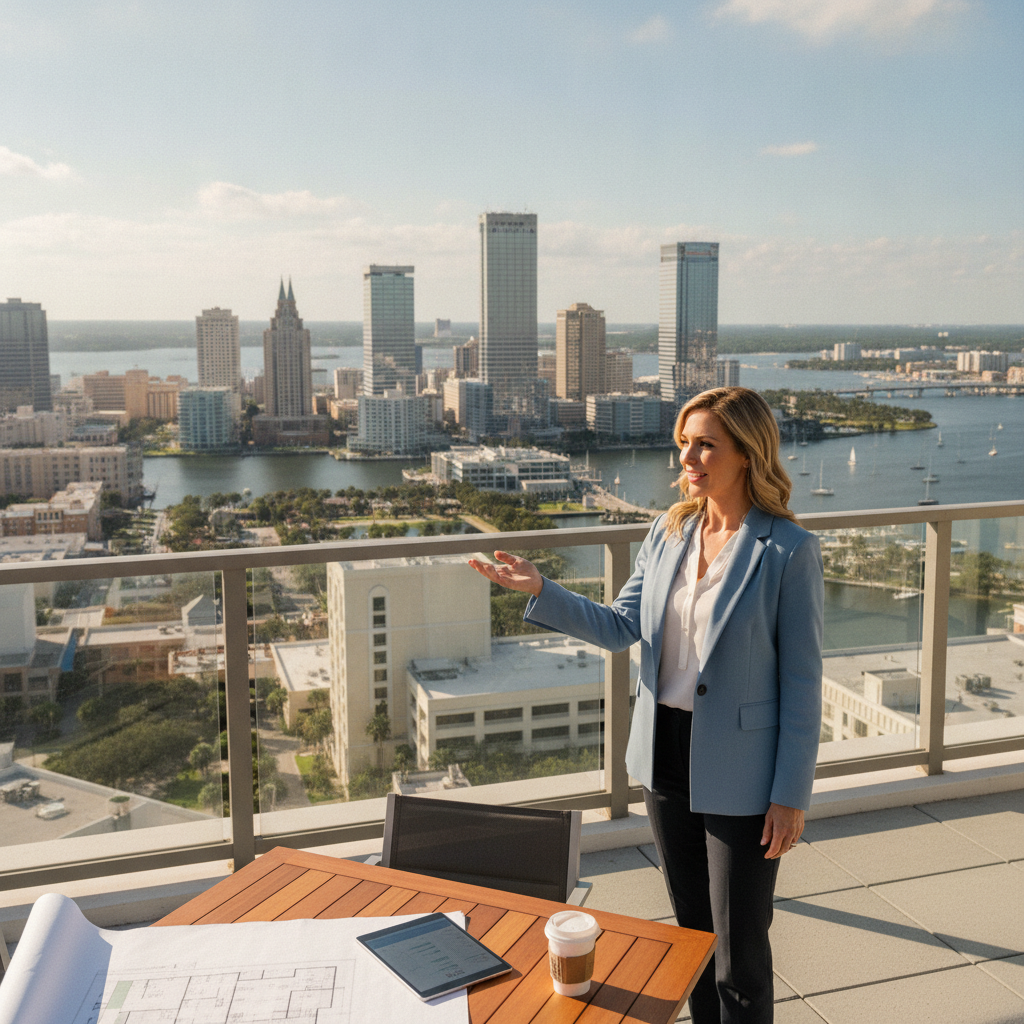
If you're researching how to get into real estate in Tampa Bay, you're stepping into one of Florida's largest and most competitive housing markets — one that rewarded speed and scarcity during the pandemic but now rewards pricing discipline, negotiation skill, and local market fluency. Whether you're a career-changer, a recent graduate, or someone relocating to the Tampa Bay area who has fallen in love with the business of homes, understanding how to get into real estate requires more than passing a state exam. It requires a clear plan for licensing, brokerage selection, market education, and client development. This guide walks through exactly how to get into real estate in Tampa Bay, step by step, using current licensing rules and the latest regional market data.
TL;DR — The Bottom Line
Learning how to get into real estate in Tampa Bay starts with Florida's 63-hour pre-licensing course, a background check, and a passing exam score, followed by activating your license with a sponsoring broker. From there, success depends on completing 45 hours of post-licensing education, choosing the right brokerage, and specializing in a Tampa Bay submarket rather than trying to serve the entire metro area. Current conditions — roughly 19,941 active listings and 48-68 days on market — mean new agents need pricing and negotiation skills more than ever.
Quick Facts
- Pre-licensing education required: 63 classroom hours (Florida sales associate course)
- Post-licensing education (first renewal): 45 hours for sales associates
- License renewal cycle: Every 2 years
- Tampa Bay active listings (year-end 2025): 19,941, up 11% year over year
- Homes sold in Tampa Bay in 2025: approximately 51,751, down 4.6% from 2024
- Median days on market (Tampa, 2026 data): roughly 48-68 days depending on source
What Does Getting Into Real Estate in Tampa Bay Actually Mean?
Before diving into paperwork, it helps to define the goal. Learning how to get into real estate isn't a single event — it's a sequence of three distinct phases: becoming licensed, becoming competent, and becoming productive. Many new agents focus almost entirely on the first phase and underestimate the second and third, which is why a large share of newly licensed agents in Florida never close more than a handful of transactions in their first year.
In Tampa Bay specifically, "getting into real estate" also means accepting that the region is not one market. Tampa, St. Petersburg, Clearwater, Brandon, Wesley Chapel, Riverview, and Palm Harbor each have different buyer profiles, price points, insurance considerations, and inventory levels. An agent who understands how to get into real estate the right way treats hyperlocal knowledge as a core job requirement, not an optional specialty.
It's also worth noting that figuring out how to get into real estate today is different from doing so five years ago. The frantic, bidding-war market of 2021-2022 has given way to a more balanced environment with more inventory, longer days on market, and buyers who expect agents to justify pricing with real data rather than momentum.
Florida Licensing Requirements: Your Step-by-Step Path
The formal process of how to get into real estate in Florida is well-defined by the Department of Business and Professional Regulation (DBPR). Here is the standard sequence for aspiring Tampa Bay agents.
- Confirm eligibility. You must be at least 18 years old, hold a high school diploma or equivalent, and have a valid Social Security number. Florida does not require a college degree, though a qualifying four-year real estate degree can sometimes satisfy the education requirement.
- Complete the 63-hour pre-licensing course. Florida law caps the initial sales associate course at 63 classroom hours, covering real estate law, contracts, finance, and ethics. This is the single most time-consuming step in how to get into real estate and typically takes a few weeks of part-time study.
- Submit your application and fingerprints. Apply through the DBPR, complete electronic fingerprinting, and pass a criminal background review.
- Pass the Florida sales associate exam. The state exam tests real estate principles, Florida-specific law, contracts, financing, and brokerage operations.
- Activate your license with a sponsoring broker. A newly issued license is inactive until placed with a licensed Florida broker, which is why choosing a brokerage is arguably the most consequential decision in how to get into real estate successfully.
- Complete post-licensing education. Before your first renewal, sales associates generally must complete 45 hours of approved post-licensing coursework; brokers must complete 60 hours. Licenses are typically renewed every two years.
Most candidates complete the 63-hour course, background check, and exam process in two to four months, depending on how quickly they study and schedule testing. Activating a license with a broker can happen almost immediately after passing the exam.

It's worth repeating that a sales associate license is not a standalone business license — it authorizes you to work under a broker's supervision. Many people researching how to get into real estate assume licensing alone creates a career; in reality, licensing is simply the entry ticket.
Understanding the Tampa Bay Market Before You Start
Anyone serious about how to get into real estate in this region needs to internalize current market conditions, because advising clients with outdated pandemic-era assumptions damages credibility quickly. Tampa Bay ended 2025 with 19,941 active listings, an 11% increase from December 2024, while roughly 51,751 homes sold for the year — down 4.6% from 2024 and about 24% below 2019 levels, according to regional MLS-based reporting.
Pricing data also varies meaningfully by source and geography, which is itself an important lesson for new agents. A mid-2026 market review put the Tampa Bay median sale price near $381,436 with 4.5 months of supply and median days on market around 48. Another Tampa-specific report cited a median sale price of $377,500 with 64 days on market and 4.7 months of supply, while Realtor.com listed a Tampa median list price of $399,925, down 4.6% year over year, with homes taking a median of 68 days to sell. Redfin, using different methodology and property mix, reported a considerably higher median sale price near $450,000 for Tampa.
These discrepancies aren't contradictions — they reflect different data sets, time periods, and geographic boundaries. New agents learning how to get into real estate should resist quoting a single "Tampa Bay number" to clients and instead pull neighborhood-level comparables for every listing or offer.
Choosing a Brokerage: What New Agents Need to Know
Once you understand how to get into real estate from a licensing standpoint, the next major decision is which broker will sponsor your license. This choice shapes your training, commission split, lead support, technology access, and day-to-day mentorship far more than most new agents expect.
Tampa Bay's brokerage landscape is varied: national franchises such as Keller Williams, Coldwell Banker, RE/MAX, and Compass offer brand recognition and structured training; boutique and independent brokerages often offer more personalized mentorship and flexible commission structures; and relocation- or new-construction-focused teams provide built-in lead flow for agents willing to specialize in those niches. There is no universally "best" brokerage — the right fit depends on how much structure, mentorship, and lead generation support you need as you figure out how to get into real estate as a sustainable career rather than a side project.
Questions worth asking any brokerage before joining include: What does onboarding and mentorship look like in the first 90 days? What is the commission split, and does it change with production? What marketing, CRM, or lead-generation tools are included? How many transactions does the average first-year agent close?
No. Florida's licensing requirement is a high school diploma or equivalent combined with the 63-hour pre-licensing course. A real estate or business degree can be helpful for market analysis and client communication, but it is not a legal requirement.
Building Your Business: Skills, Niches, and First Clients
Passing the exam answers the licensing question of how to get into real estate, but building a sustainable book of business is a separate skill set entirely. New Tampa Bay agents who succeed tend to focus early on three things: local specialization, pricing literacy, and consistent lead follow-up.
Pick a geographic or demographic lane
Rather than marketing yourself across the entire Tampa Bay metro, choose a defensible niche — for example, South Tampa bungalows, St. Petersburg condos, Riverview family homes, or relocating professionals moving to Wesley Chapel. Specialization accelerates the process of how to get into real estate productively because referral sources and past clients remember agents with a clear identity far more than generalists.
Learn pricing and negotiation, not just listings
With Tampa Bay's median days on market now ranging roughly 48 to 68 days and only a small share of homes selling above list price, today's clients need agents who can explain carrying costs, insurance realities, and comparable sales rather than simply posting a listing and waiting. This analytical skill set is quickly becoming the real differentiator for anyone exploring how to get into real estate in a slower, more negotiated market.
Build a referral and database habit early
Most new agents' first few transactions come from their existing personal network. Systematically tracking contacts, following up, and asking for referrals from day one shortens the runway between licensing and your first closing.
Working alongside an established local professional can shorten this learning curve considerably. Agents and clients alike can review current listings, pricing insight, and market commentary from Kyle Hollister to see how an experienced Tampa Bay advisor approaches pricing and negotiation in today's conditions.
Costs, Income, and Realistic Timelines for New Agents
Understanding the financial reality of how to get into real estate helps set expectations before you commit. Upfront costs typically include pre-licensing course tuition, exam fees, fingerprinting, a background check, MLS and association dues, and post-licensing coursework. Ongoing costs include marketing, signage, photography, and brokerage fees, which vary by commission structure.
| Stage | Typical Timeframe | Primary Focus |
|---|---|---|
| Licensing | 2-4 months | 63-hour course, exam, background check |
| Brokerage onboarding | 1-3 months | Choosing a broker, training, systems setup |
| First transactions | 3-9 months | Database outreach, open houses, referrals |
| Post-licensing education | Within first renewal period | 45 required hours before first license renewal |
| Market specialization | 12-24 months | Developing a geographic or client niche |
Income for new agents is commission-based and can be inconsistent in the first year, which is why many successful Tampa Bay agents maintain some financial cushion or part-time income while building momentum. This is a practical, often under-discussed part of how to get into real estate that candidates should plan for before quitting other employment.
Common Mistakes Aspiring Agents Make in Tampa Bay
Even candidates who understand the formal steps of how to get into real estate sometimes stumble on avoidable mistakes:
- Treating licensing as the finish line. Passing the exam only authorizes you to begin working; it does not generate clients automatically.
- Trying to cover the entire Tampa Bay metro at once. Spreading marketing across Tampa, St. Petersburg, Clearwater, and the suburbs simultaneously dilutes your message compared with a focused local niche.
- Ignoring post-licensing education deadlines. Missing the required 45 hours before your first renewal can put your license at risk.
- Quoting outdated, pandemic-era market expectations. With months of supply back near 4.5 and days on market stretching toward 48-68 days, bidding-war assumptions mislead clients.
- Choosing a brokerage based only on commission split. Mentorship, lead support, and training quality often matter more than a few extra percentage points in your first year.
Frequently Asked Questions
How do I get into real estate in Florida without prior experience?
You don't need prior real estate experience to get into real estate in Florida. You need to be at least 18, hold a high school diploma or equivalent, complete the 63-hour pre-licensing course, pass a background check, pass the state exam, and activate your license with a sponsoring broker.
How much does it cost to get into real estate in Tampa Bay?
Costs vary by course provider and brokerage, but candidates should budget for pre-licensing course tuition, exam fees, fingerprinting and background check fees, post-licensing coursework, and MLS or association dues once licensed. Ongoing marketing costs depend on your brokerage's fee structure.
How long does the Florida real estate licensing process take?
Most candidates complete the 63-hour pre-licensing course, application, fingerprinting, and exam process in roughly two to four months, though timing depends on course pace and exam scheduling.
Is now a good time to get into real estate in Tampa Bay?
Tampa Bay's market has shifted toward more balanced conditions, with active listings up 11% year over year and median days on market in the 48-68 day range. This creates opportunity for agents who can offer strong pricing and negotiation guidance, though it also means new agents need real skill-building, not just favorable market momentum, to succeed.
Do I need to join a brokerage to get into real estate?
Yes. In Florida, a newly issued sales associate license is inactive until it is placed with a licensed broker. You cannot legally conduct real estate transactions independently until you later qualify for and obtain a broker's license.
Final Thoughts: Turning Licensing Into a Career
Figuring out how to get into real estate in Tampa Bay is really a two-part challenge: satisfying Florida's licensing requirements and then building genuine local expertise in a market that has become more measured, more data-driven, and more competitive since the pandemic years. The mechanics — the 63-hour course, the background check, the state exam, broker activation, and 45 hours of post-licensing education — are well defined and achievable within a few months. The harder, more valuable work is developing pricing judgment, negotiation skill, and a clear geographic or client niche within Tampa, St. Petersburg, Clearwater, or the surrounding suburbs.
Whether you're pursuing a license yourself or simply want to work with an agent who understands these market dynamics firsthand, connecting with an experienced local professional can make the difference between guesswork and informed decisions. Visit Kyle Hollister to learn more about current Tampa Bay market conditions and get guidance tailored to your goals as a buyer, seller, or aspiring agent.