Moving to Tampa Bay Pros and Cons: A Buyer's Guide
October 12, 2026 · 13 min read

If you're researching moving to Tampa Bay pros and cons before making an offer on a home or listing yours for sale, you're asking exactly the right question. As a Tampa Bay broker who has lived and worked across Hillsborough, Pinellas, and surrounding counties, I've walked hundreds of buyers and sellers through this exact calculus. This guide breaks down the real trade-offs of moving to Tampa Bay — not just the sunshine and no-income-tax headlines, but the insurance costs, housing market shifts, and infrastructure changes that will actually affect your monthly budget and your long-term equity.
TL;DR — The Bottom Line
Moving to Tampa Bay pros and cons come down to a trade-off: you gain no state income tax, year-round outdoor living, a diversified job market, and a housing market that increasingly favors buyers — but you take on meaningfully higher insurance costs, flood-zone complexity, and years of construction-related traffic through 2027 and beyond. For most relocators, the pros still outweigh the cons, provided you budget for insurance before you buy and research neighborhoods at a granular level.
Quick Facts
- Tampa metro median home value: approximately $376,000, down about 4.2% year over year
- Regional median sale price: approximately $443,000, down roughly 1.4% year over year
- Average days on market: about 41 days, up from 36 days a year earlier
- Months of housing supply: approximately 3.9 months, the highest in many local markets since 2020
- State income tax: $0 — Florida has no personal state income tax
- Regional infrastructure investment: about $752 million approved by the Tampa Hillsborough Expressway Authority
Moving to Tampa Bay Pros and Cons: The Big Picture
When people ask me about moving to Tampa Bay pros and cons, they usually expect a simple yes-or-no answer. The honest reply is that Tampa Bay rewards buyers who do their homework and can surprise those who don't. The region's appeal — warm weather, no state income tax, beaches, and a growing economy — is real and well documented. But the disadvantages are just as real: insurance premiums that have climbed sharply in recent years, property tax and CDD/HOA fees that vary widely by community, and a housing market that has shifted from the frenzied seller's market of 2021-2022 toward something closer to balanced, or even buyer-favorable, in several submarkets.
That shift matters. Homes across the region are now taking roughly 41 days to sell on average, up from 36 days a year earlier, and regional inventory sits near 3.9 months of supply — the highest level in many local markets since 2020.[1] In Hillsborough County specifically, supply is running closer to 3.5 to 4 months, which typically signals a market where buyers have more negotiating room and more time for inspections.[2] For anyone weighing moving to Tampa Bay pros and cons, this is good news: you're less likely to face the bidding wars and waived-contingency pressure that defined the market a few years ago.
The Pros of Moving to Tampa Bay
Let's start with what draws people here in the first place. These are the pros side of the moving to Tampa Bay pros and cons equation that most relocators already know about — plus a few that are less obvious until you've lived here.
No state income tax
Florida's lack of a personal state income tax is one of the most quantifiable financial benefits of relocating. For a household earning $120,000 a year moving from a state with a 5-6% income tax, that can mean $6,000-$7,000 in annual savings — money that can offset higher insurance premiums or fund a larger down payment.
Climate and outdoor lifestyle
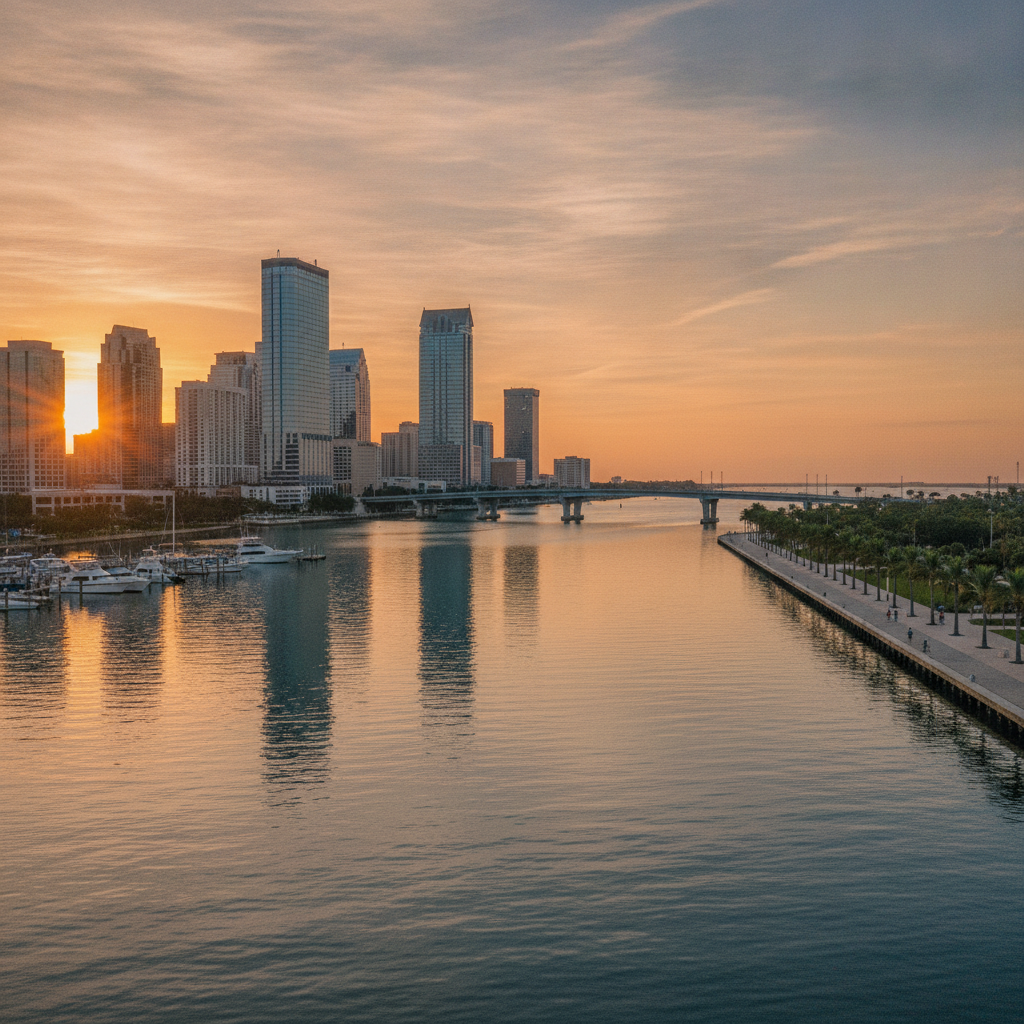
Tampa Bay offers roughly 361 miles of coastline access across its counties, year-round boating and fishing, and a mild winter that draws snowbirds and permanent relocators alike. Golf, paddleboarding, and waterfront dining are part of daily life rather than occasional vacation activities.
A diversified job market
Unlike tourism-dependent Florida markets, Tampa Bay's economy spans health care and life sciences, financial and professional services, logistics, and a growing tech sector. This diversification matters for long-term housing demand stability, which is relevant to anyone evaluating moving to Tampa Bay pros and cons from an investment or career-security standpoint.
Relative affordability compared to other Sun Belt metros
Compared with South Florida, coastal California, or parts of the Northeast, Tampa Bay's median prices — roughly $376,000 to $443,000 depending on the measure used — remain accessible for many relocating households, especially those bringing equity from a higher-cost market.
Generally, yes for housing costs — Tampa Bay's median home prices tend to run below Miami's and are competitive with or slightly below Orlando's, though insurance costs in coastal Tampa Bay zip codes can approach Miami-area levels depending on flood zone and proximity to water.
The Cons of Moving to Tampa Bay: Insurance, Taxes, and Storm Exposure
No honest discussion of moving to Tampa Bay pros and cons can skip the costs that catch relocators off guard. These are the factors that most affect monthly affordability and long-term ownership costs.
Homeowners and flood insurance
Insurance is arguably the single biggest financial surprise for people moving to Tampa Bay. Properties in coastal and low-lying areas may require — or strongly benefit from — separate flood insurance in addition to standard homeowners coverage.[3] Flood-zone designations vary significantly even between nearby neighborhoods, and a property just outside a high-risk zone is not automatically risk-free. Premiums, deductibles, roof age requirements, and wind-mitigation discounts can swing the all-in cost of ownership by hundreds of dollars a month.
Actionable advice: Get an insurance quote before you waive an inspection or financing contingency, not after you're already under contract. Treating insurance as a closing-stage afterthought is one of the most common and costly mistakes relocators make.
Property taxes, HOA, and CDD fees
Florida property taxes are assessed locally and can vary meaningfully between counties and even between adjacent subdivisions. Newer communities, particularly in Pasco and parts of Hillsborough, often carry Community Development District (CDD) fees on top of standard property taxes and HOA dues — a detail that's easy to miss when comparing listing prices alone.
Storm exposure and construction disruption
Hurricane season runs June through November, and while modern building codes have made newer construction far more resilient, older homes may need roof, window, or electrical updates to qualify for favorable insurance rates. Separately, major regional infrastructure projects mean construction-related congestion will be part of daily life in several corridors for the next few years.
Tampa Bay Housing Market Conditions Relocators Should Know
Understanding current market conditions is essential to weighing moving to Tampa Bay pros and cons accurately, because the market relocators are entering today looks different from the one that made headlines a few years ago.
| Metric | Current Reading | Trend |
|---|---|---|
| Tampa metro median home value | ~$376,000 | Down 4.2% YoY |
| Regional median sale price | ~$443,000 | Down ~1.4% YoY |
| Average days on market | ~41 days | Up from 36 days |
| Months of supply (regional) | ~3.9 months | Highest since 2020 |
| Tampa single-family median (Sept. 2026) | ~$415,000 | 45-55 days to contract |
| Hillsborough County supply | 3.5-4 months | Balanced to buyer-favoring |
The practical takeaway: buyers generally have more negotiating power and more time for inspections than they did several years ago, while sellers must price accurately and prepare for longer marketing periods. For relocators moving from faster-moving or more competitive markets, this is a meaningful shift worth understanding before you start house-hunting.
With inventory at its highest level since 2020 and homes taking longer to sell, buyers currently have more leverage to negotiate price, request repairs, and secure favorable contingencies than during the pandemic-era seller's market — making this a reasonable window for relocators who are ready, rather than a market to time perfectly.
Transportation and Infrastructure: What's Changing
Transportation is both a challenge and an area of substantial investment, and it directly affects quality of life for anyone commuting across the bay. The Howard Frankland Bridge opened new general-use lanes in spring 2025, with express lanes scheduled for summer 2026, and reconstruction of Tampa's Westshore Interchange began in early 2026.[4] The Tampa Hillsborough Expressway Authority has approved a multiyear program totaling approximately $752 million, including about $692 million in infrastructure improvements across the Selmon Expressway, US 301 ramps, Meridian Avenue, and Brandon Parkway.[5] A new ferry service is also being developed as an alternative to driving across I-275 or the Gandy Bridge.
These projects could meaningfully improve regional mobility and support redevelopment over the next five to ten years — but construction may create years of congestion, noise, and altered access near affected corridors in the meantime. Relocators evaluating a specific commute should drive it during peak hours before committing, not just check a map's estimated travel time.
Neighborhood Differences That Affect Your Pros and Cons List
One of the most important realities of moving to Tampa Bay pros and cons is that they shift dramatically by neighborhood. A flood-zone concern in a low-lying Pinellas barrier island community may be irrelevant in inland Lutz or Wesley Chapel. Commute-related cons near the Westshore Interchange construction zone don't apply to someone settling in Riverview or Palm Harbor. Insurance costs near the immediate coastline in St. Petersburg or Clearwater Beach can run substantially higher than inland Hillsborough or Pasco County properties just a few miles away.
This is exactly why generic national advice about Florida relocation often falls short — the pros and cons genuinely depend on which part of Tampa Bay you're considering, your commute tolerance, your flood-risk comfort level, and whether you prioritize walkable urban living, suburban family neighborhoods, or waterfront access above everything else.
Inland communities in Hillsborough and Pasco counties — such as Lutz, Wesley Chapel, and parts of Riverview — generally see lower flood insurance exposure than immediate coastal and barrier-island locations in Pinellas County, though wind and hurricane coverage still applies regionwide.
How to Weigh Moving to Tampa Bay Pros and Cons for Your Situation
Rather than treating this as an abstract list, walk through these steps as you evaluate your own move.
- Define your non-negotiables. Decide whether proximity to water, school zones, or commute time matters most — this immediately narrows which pros and cons are relevant to you.
- Get an insurance quote early. Request quotes for homeowners and flood insurance before writing an offer, not after you're under contract.
- Check flood zone and elevation data independently. Don't rely solely on a listing description; verify FEMA flood maps and elevation certificates for any property you're serious about.
- Research HOA and CDD fees in writing. Ask for the most recent HOA budget and CDD bond disclosure before finalizing your decision.
- Drive the commute at peak hours. Infrastructure construction near the Howard Frankland Bridge and Westshore Interchange can change real-world travel times significantly.
- Compare at least three neighborhoods. Because pros and cons vary block by block in Tampa Bay, compare inland, suburban, and coastal options before committing to one area.
Working with a broker who knows both the macro market data and the micro-level neighborhood realities can shortcut much of this research. Kyle Hollister has lived and worked across Tampa Bay and can help you map these trade-offs against your specific budget and priorities.
Frequently Asked Questions
What are the biggest pros and cons of moving to Tampa Bay?
The biggest pros of moving to Tampa Bay are no state income tax, warm year-round climate, a diversified economy, and relative affordability compared to other Sun Belt metros. The biggest cons are rising homeowners and flood insurance costs, variable property tax and CDD/HOA fees, hurricane season exposure, and years of ongoing construction on major commuter routes.
Is Tampa Bay a buyer's market or seller's market right now?
Current data shows the Tampa Bay market has shifted toward balanced-to-buyer-favorable conditions, with regional inventory near 3.9 months of supply — the highest since 2020 — and average days on market rising to about 41 days. This gives buyers more negotiating room than during the pandemic-era seller's market, though pricing and demand still vary by neighborhood.
How much does flood insurance add to the cost of owning a home in Tampa Bay?
Flood insurance costs vary widely based on flood zone, elevation, and the age and construction of the home, ranging from a few hundred dollars a year for inland, lower-risk properties to several thousand dollars annually for coastal or barrier-island homes. Buyers should obtain a quote before finalizing an offer rather than estimating costs after closing.
Which Tampa Bay counties should relocators compare?
Relocators typically compare Hillsborough County (Tampa, Brandon, Riverview), Pinellas County (St. Petersburg, Clearwater, Palm Harbor), Pasco County (Wesley Chapel, Land O'Lakes), and Hernando County, since insurance costs, commute times, and new-construction availability differ meaningfully across these four counties.
Will Tampa Bay traffic get better or worse for new residents?
In the short term, construction tied to projects like the Howard Frankland Bridge express lanes and the Westshore Interchange rebuild may increase congestion through at least 2027, but the completed projects — along with new ferry service and managed lanes — are designed to improve long-term regional mobility.
Final Verdict on Moving to Tampa Bay Pros and Cons
So where does that leave the overall verdict on moving to Tampa Bay pros and cons? For most relocators, the financial upside of no state income tax, a diversified job market, and relatively accessible home prices outweighs the added costs of insurance and taxes — provided those costs are budgeted for upfront rather than discovered at closing. The current housing market, with rising inventory and longer days on market, also means relocators have more room to negotiate and more time to make an informed decision than buyers did just a few years ago.
Ultimately, moving to Tampa Bay pros and cons aren't one-size-fits-all; they depend on which county, which flood zone, and which commute you're evaluating. The relocators who do best are the ones who treat insurance quotes, flood maps, and HOA disclosures as early-stage research rather than late-stage paperwork.
If you're ready to turn this research into a concrete plan — whether you're buying your first Tampa Bay home, selling before a move, or comparing neighborhoods across Hillsborough, Pinellas, and Pasco counties — reach out to Kyle Hollister for a personalized, data-backed walkthrough of your specific situation. Understanding the full picture of moving to Tampa Bay pros and cons now can save you thousands of dollars and months of frustration later.