Tampa Bay Pre-Construction Homes vs Existing Homes: Guide
November 13, 2026 · 13 min read
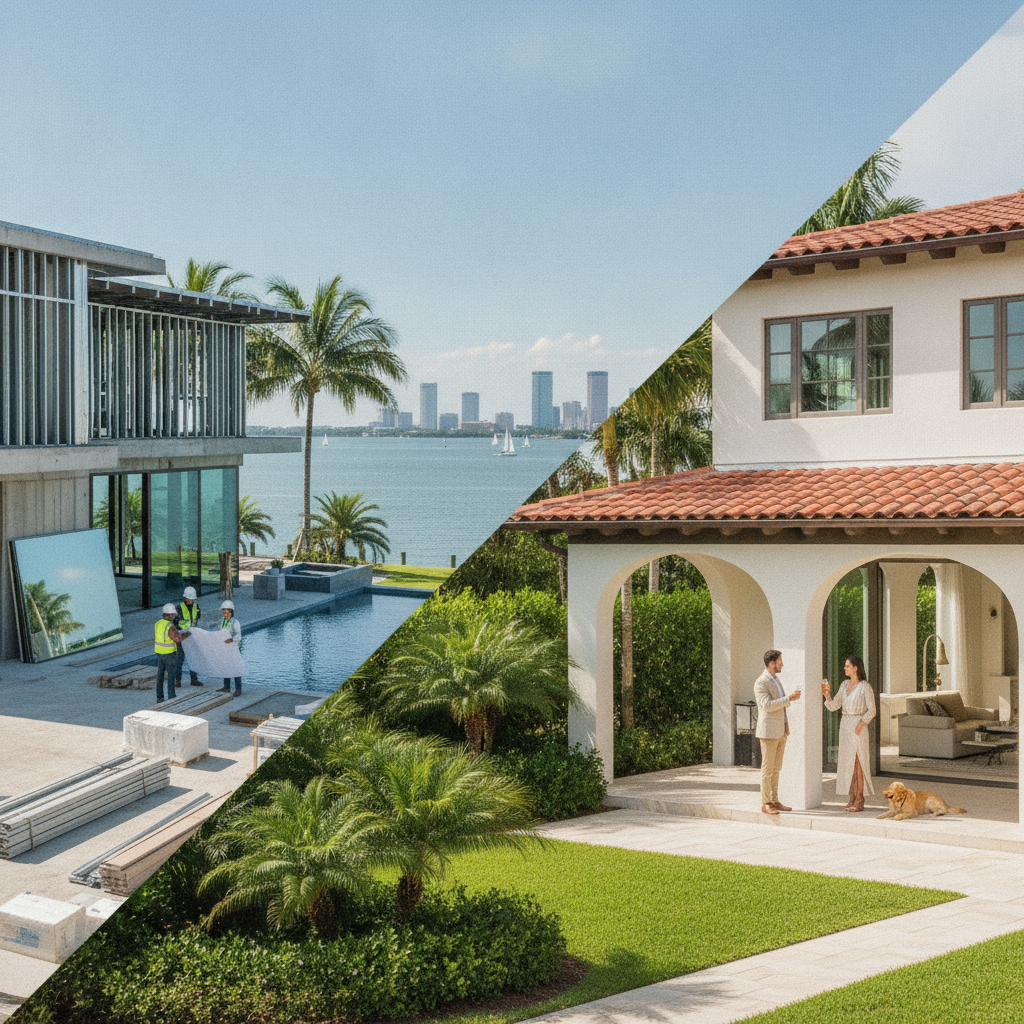
Choosing between Tampa Bay pre-construction homes vs existing homes is one of the most consequential decisions a buyer in this market will make, and it's rarely as simple as "new is better" or "established is safer." With inventory levels, insurance costs, and builder incentives all shifting in 2026, the right answer depends on your timeline, your risk tolerance, and the specific submarket you're targeting. This guide breaks down the real trade-offs so you can make a decision grounded in data rather than assumptions.
TL;DR — The Bottom Line
When comparing Tampa Bay pre-construction homes vs existing homes, pre-construction typically offers newer systems, builder incentives, and lower near-term maintenance, but carries completion timeline risk and is concentrated in outer suburban corridors. Existing homes offer immediate occupancy, established neighborhoods, and a clearer picture of true condition and insurance costs, but may need updates. With roughly five months of supply and a 93.4% sale-to-list ratio in Tampa as of September 2026, buyers have meaningful negotiating leverage in both categories.
Quick Facts
- Tampa median sale price (Sept. 2026): $369,000
- Tampa homes for sale: 19,585 active listings
- Average days on market (Tampa): 73 days
- Months of supply: approximately 5 months
- Sale-to-list price ratio: 93.4%
- Statewide FL median single-family price (Sept. 2026): approximately $415,000
Understanding the Tampa Bay Market Right Now
Before weighing Tampa Bay pre-construction homes vs existing homes on their individual merits, it helps to understand the broader market context. Tampa's housing market in late 2026 looks nothing like the frenzied bidding wars of 2021. Tampa's September 2026 median sale price was reported at $369,000, with 19,585 homes for sale, roughly 73 days on market, and approximately five months of supply — a sale-to-list price ratio of 93.4% (Source: Redfin Data Center, redfin.com). A separate Tampa-area data source reported an October 2026 median closed price near $390,500, with homes averaging about 43 days on market and a 95.2% sale-to-list ratio (Source: Local MLS aggregator report, 2026). The gap between these figures underscores an important point: results vary significantly by neighborhood, price tier, and property type.
Statewide, Florida's third-quarter 2026 existing single-family home sales rose just 0.2% year over year, while condo-townhouse sales increased 3.1%. The statewide single-family median price sat near $415,000 in September (Source: Florida Realtors Research Department, floridarealtors.org). Meanwhile, new-home construction has cooled from its earlier peak, with one Tampa Bay analysis citing new-home starts down nearly 10% year over year, with building activity increasingly concentrated in outer-growth corridors such as Wesley Chapel, Parrish, Wimauma, Ruskin, and east Brandon (Source: Builder trend analysis, 2026). This is the backdrop against which every Tampa Bay pre-construction homes vs existing homes comparison should be evaluated — it's a buyer-friendlier market than a few years ago, but conditions differ sharply by location.
Tampa Bay Pre-Construction Homes vs Existing Homes: Comparing the Real Costs
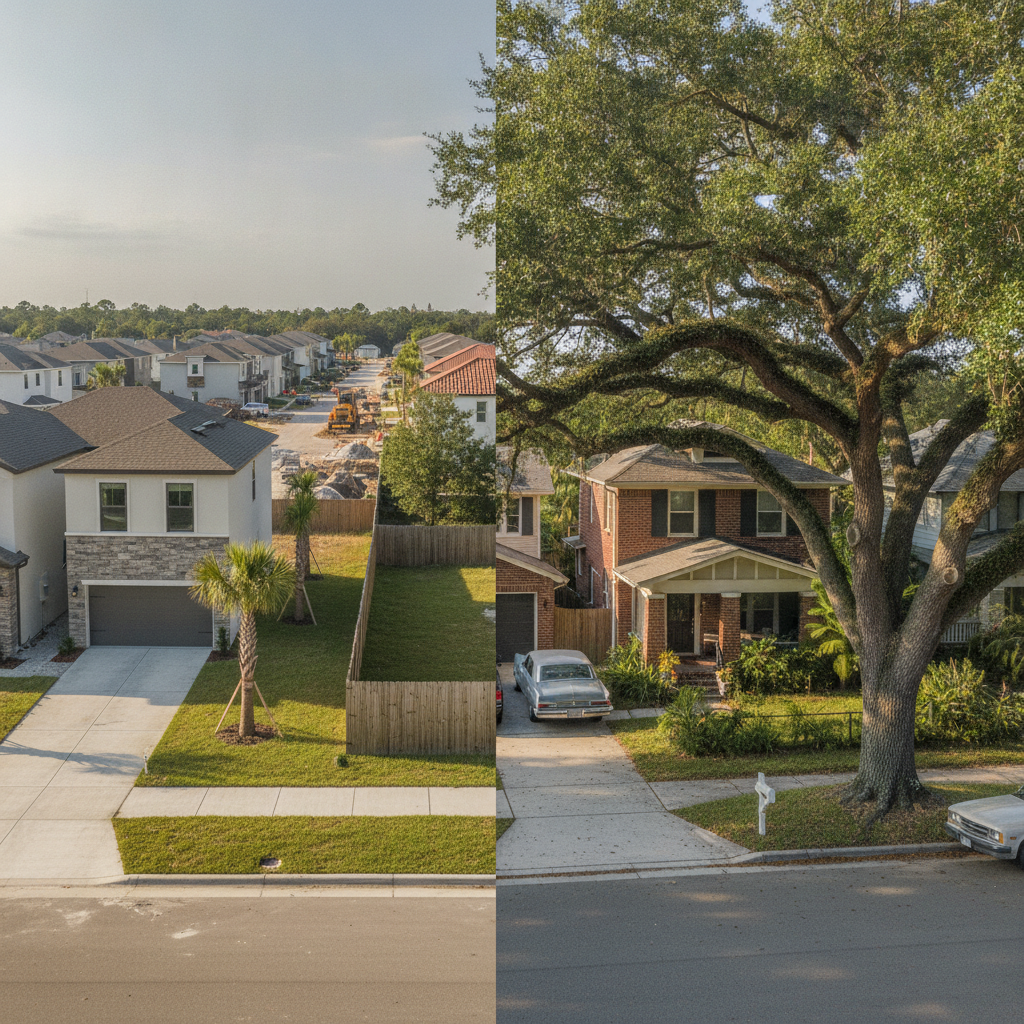
The headline price tag rarely tells the full story. When buyers compare Tampa Bay pre-construction homes vs existing homes purely on list price, they often miss the costs that accumulate afterward — HOA fees, CDD assessments, upgrade packages, and insurance premiums that can vary substantially by construction year and materials.
National research cited by Realtor.com has found that new construction can sell for roughly $20,000 to $28,000 less than existing homes in some markets, though this is not a guaranteed outcome in Tampa Bay and depends heavily on lot size, location, and included features (Source: Realtor.com Research, realtor.com). Builders frequently offset a seemingly lower base price with lot premiums, structural options, and design-center upgrades that can add tens of thousands of dollars before closing.
| Factor | Pre-Construction | Existing Homes |
|---|---|---|
| Typical move-in timeline | 4–12+ months (subject to delays) | 30–60 days |
| Price negotiability | Builder incentives, rate buydowns, upgrade credits | Direct price negotiation, seller concessions |
| Condition certainty | Built to current code, but unproven over time | Known history, available via inspection |
| Insurance costs | Often lower (new roof, newer systems, impact windows) | Varies widely by roof age and update history |
| Customization | High during pre-sale phase | Limited to post-purchase renovation |
| Neighborhood maturity | Often newer, outer-corridor locations | Established trees, retail, and school patterns |
It depends on the submarket. In outer-growth corridors like Wesley Chapel or Parrish, pre-construction pricing with builder incentives can be competitive with or below comparable resale listings. In established areas like South Tampa or central Pinellas, existing homes often remain the more cost-effective entry point because very little new construction is available there.
The Case for Pre-Construction Homes in Tampa Bay
For many buyers evaluating Tampa Bay pre-construction homes vs existing homes, the appeal of new construction is straightforward: everything is new. Roofs, HVAC systems, plumbing, electrical panels, windows, and appliances are all built to current Florida building code, which has become significantly more stringent since Hurricane Michael and subsequent legislative updates. This can translate into lower near-term repair costs and, in many cases, meaningfully lower windstorm and homeowners insurance premiums compared with an older resale property.
Builder incentives have also become a larger part of the pre-construction value proposition in 2026. With mortgage rates still elevated relative to the 2020–2021 era, many national and regional builders are offering mortgage-rate buydowns, closing-cost credits, or free upgrade packages instead of cutting sticker prices outright. These incentives can be genuinely valuable, but buyers should always calculate the effective total cost — including lot premiums, HOA dues, CDD fees, and the cost of any upgrades — before assuming a pre-construction home is the better deal.
Energy efficiency is another real advantage. Newer insulation standards, high-performance windows, and updated HVAC equipment can meaningfully reduce monthly utility bills, which partially offsets a higher purchase price over time. Buyers who plan to hold a property for many years may find that these efficiency gains compound into real savings.
The Case for Existing Homes in Tampa Bay
On the other side of the Tampa Bay pre-construction homes vs existing homes decision, resale properties offer something pre-construction simply cannot: certainty. What you see during a showing and inspection is what you get. There's no risk of the floor plan changing, no risk of a completion date slipping, and no dependency on a builder's production schedule.
Existing homes are also concentrated in Tampa Bay's most established and desirable locations — South Tampa, Hyde Park, central St. Petersburg, Davis Islands, and mature Pinellas County neighborhoods — where little to no new construction is available. For buyers who prioritize walkability, mature tree canopy, proximity to downtown employment centers, or specific school zones, an existing home is often the only realistic path into that neighborhood.
Resale homes also tend to offer more room for negotiation in a market with roughly five months of supply. Sellers of existing homes, unlike production builders, can adjust price, closing timeline, and repair credits on a case-by-case basis. With a sale-to-list ratio around 93–95% across much of Tampa Bay, buyers have real room to negotiate rather than accepting a fixed builder price sheet.
Insurance, Maintenance, and the Hidden Cost Factors
Insurance has become one of the most decisive — and often underestimated — factors in the Tampa Bay pre-construction homes vs existing homes decision. Florida's property insurance market has tightened considerably over the past several years, and roof age, wind mitigation features, and construction materials directly affect premium costs.
Pre-construction homes typically qualify for the most favorable wind mitigation credits because they include impact-rated windows, newer roof-to-wall connections, and updated hurricane strapping as standard. Existing homes can still qualify for strong credits, but only if the roof, windows, and other features have been updated or verified through a wind mitigation inspection. A 15-year-old roof on an otherwise well-maintained resale home can add hundreds of dollars per year to a premium compared with a brand-new roof.
Maintenance costs follow a similar pattern. New homes generally require less in year one through year five, while existing homes — particularly those built before 2000 — may need near-term investment in roofing, HVAC replacement, or electrical panel upgrades. Buyers should request seller disclosures, four-point inspections, and wind mitigation reports for any existing home under serious consideration, and should factor estimated insurance premiums into their monthly budget before comparing it against a pre-construction alternative.
Generally yes, because new homes meet current Florida building code and typically include impact windows and updated roof-to-wall connections that qualify for stronger wind mitigation credits. However, an older existing home with a recently replaced roof and documented wind mitigation features can sometimes achieve comparable insurance savings.
Timing, Financing, and Risk Tolerance
Your personal timeline should weigh heavily in any Tampa Bay pre-construction homes vs existing homes analysis. If you need to be in a home within 60 to 90 days — because of a job start date, a lease expiration, or a school-year deadline — an existing home is almost always the safer choice. Pre-construction completion dates are estimates, not guarantees, and delays of several months are common across the industry due to permitting, inspections, and supply chain factors.
Financing structures also differ. Pre-construction purchases often require an earnest deposit held for months before closing, and buyers may need to lock a mortgage rate later in the process, exposing them to rate movement risk. Builders sometimes offset this with their in-house or preferred lender incentives, such as temporary or permanent rate buydowns. Existing-home buyers, by contrast, typically lock financing closer to the purchase date and have more certainty about their final monthly payment earlier in the process.
Risk tolerance is the final piece. Buyers comfortable with some uncertainty — in exchange for newer construction, incentives, and customization — may lean toward pre-construction. Buyers who prioritize predictability, established neighborhoods, and immediate occupancy will typically be better served by an existing home. Neither choice is inherently superior; it's a question of fit.
How to Decide: A Step-by-Step Framework
Working through the Tampa Bay pre-construction homes vs existing homes decision methodically helps avoid costly mistakes. Consider this framework:
- Define your move-in deadline. If you have a hard deadline within 90 days, existing homes should be your primary focus.
- Identify your target neighborhoods. Check whether meaningful new construction even exists in your preferred area — many established Tampa Bay neighborhoods have little to none.
- Request total cost breakdowns. For pre-construction, ask builders for an all-in price including lot premium, upgrades, HOA/CDD fees, and closing costs. For existing homes, request insurance quotes and recent inspection or wind mitigation reports.
- Compare effective monthly payments. Factor in principal, interest, taxes, insurance, and HOA/CDD fees for both scenarios — not just the sale price.
- Assess your risk tolerance for delays. If a slipped completion date would create a financial or logistical hardship, weight your decision toward existing inventory.
- Get professional guidance before signing. A buyer's agent who regularly evaluates both new-construction contracts and resale transactions can flag unfavorable builder terms or underpriced resale opportunities you might otherwise miss.
Working through the Tampa Bay pre-construction homes vs existing homes decision with a knowledgeable local advisor — rather than relying solely on a builder's sales office or a single listing agent — tends to produce better long-term outcomes, particularly for first-time buyers and relocating professionals unfamiliar with Florida-specific insurance and permitting nuances. Kyle Hollister works with Tampa Bay buyers on both sides of this decision, bringing an analytical, data-driven approach to evaluating builder contracts and resale properties alike.
Frequently Asked Questions
Is pre-construction or an existing home a better investment in Tampa Bay?
It depends on the location and holding period. Pre-construction in growth corridors can appreciate as surrounding infrastructure and retail develop, while existing homes in established, supply-constrained neighborhoods often show steadier, more predictable appreciation. Both can be sound investments when purchased at a fair, well-researched price.
How long does pre-construction typically take to close in Tampa Bay?
Timelines vary widely, but four to twelve months from contract to closing is common, and delays beyond that are not unusual due to permitting, material availability, and labor constraints. Buyers with firm move-in deadlines should build in a cushion or prioritize existing homes instead.
Are builder incentives better than negotiating with a resale seller?
Builder incentives such as rate buydowns, closing-cost credits, and upgrade packages can offer real value, but they should be compared against the all-in cost, including lot premiums and HOA/CDD fees. Resale sellers in a market with roughly five months of supply are often willing to negotiate price or repair credits directly, which can be equally or more valuable depending on the property.
Do new construction homes have lower insurance costs than existing homes in Florida?
Generally yes. New homes built to current Florida code typically include impact-rated windows and modern roof-to-wall connections that qualify for stronger wind mitigation credits, which can meaningfully lower premiums compared with an older existing home that hasn't been updated.
Which option is better for first-time buyers in Tampa Bay?
There's no universal answer — it depends on budget, desired location, and timeline flexibility. First-time buyers with flexible move-in dates and a preference for newer systems may benefit from pre-construction incentives, while those who need to move quickly or want an established neighborhood often do better with an existing home.
Final Thoughts: Making the Right Call for Your Situation
There is no universally correct answer to the Tampa Bay pre-construction homes vs existing homes question — only the answer that fits your timeline, budget, and tolerance for uncertainty. Pre-construction offers newer systems, builder incentives, and potentially lower insurance costs, but requires patience and flexibility around completion dates. Existing homes offer immediate occupancy, established neighborhoods, and negotiating room in a market that currently favors buyers more than it has in years. Many successful Tampa Bay buyers ultimately choose based on neighborhood availability alone: if your target area has little new construction, the decision largely makes itself.
Whichever direction you're leaning, working through the numbers with a local professional who understands both sides of the Tampa Bay pre-construction homes vs existing homes equation can save you from costly surprises — whether that's an underestimated builder upgrade bill or an insurance quote that derails your budget. Reach out to Kyle Hollister for a data-driven walkthrough of your specific options, or visit Hollister Real Estate to start comparing Tampa Bay pre-construction homes vs existing homes side by side for your target neighborhoods.