Cost of Living in Tampa Bay for Retirees: 2026 Breakdown
October 25, 2026 · 13 min read

If you're weighing a move to Florida's Gulf Coast, understanding the real cost of living in Tampa Bay for retirees is the first step toward building an honest retirement budget. Between home prices, property taxes, insurance, and healthcare, the numbers can swing by thousands of dollars a year depending on where — and how — you choose to live. This guide breaks down every major expense category so you can plan with confidence rather than guesswork.
TL;DR — The Bottom Line
The cost of living in Tampa Bay for retirees typically falls between $4,000 and $6,000 per month for a couple, before major medical or long-term-care expenses. Housing and insurance are the biggest variables, while Florida's lack of a state income tax helps offset rising home prices and insurance premiums. Choosing the right county, home type, and neighborhood can shift your monthly budget by $1,000 or more.
Quick Facts
- Typical monthly budget (retired couple): $4,000–$6,000
- Median Tampa Bay metro home price: approximately $385,000–$400,000
- Median Tampa rent (2026): roughly $1,635–$2,195 depending on property type
- Effective property tax rate: 0.82% in Hillsborough County, 0.67% in Pinellas County
- Florida state income tax: $0 — no tax on Social Security, pensions, or retirement withdrawals
- Estimated monthly healthcare out-of-pocket: $400–$700
Understanding the Cost of Living in Tampa Bay for Retirees
The cost of living in Tampa Bay for retirees isn't a single number — it's a range shaped by housing choice, insurance exposure, and lifestyle. A retired couple renting a modest condo in Pasco County will spend very differently than a couple owning a waterfront home in Pinellas County. That said, most financial planners and local cost-of-living data point to a practical range of $4,000 to $6,000 per month for a retired couple, excluding unusually high medical needs or long-term-care costs.
What makes Tampa Bay attractive despite rising home prices is the absence of a state income tax, generally lower healthcare costs than many Northeastern and Midwestern metros, and a wide range of housing options — from age-restricted communities in Pasco County to walkable condos in downtown St. Petersburg. Still, insurance and property-related carrying costs have become the single biggest wildcard affecting the overall cost of living in Tampa Bay for retirees, and they deserve careful attention before you commit to a purchase.
Housing Costs: Buying vs. Renting in Retirement
Housing is the largest line item in almost every retiree's budget, and it's also where Tampa Bay offers the most flexibility. Recent data shows the Tampa Bay metro median home price sitting in the $385,000–$400,000 range, though prices vary considerably by county:
| County | Approx. Median Home Price (2026) | Effective Property Tax Rate |
|---|---|---|
| Hillsborough | $408,000 | 0.82% |
| Pinellas | $375,000 | 0.67% |
| Pasco | $345,000 | Varies, generally comparable to Pinellas |
Renting remains a popular option for retirees who want to test a neighborhood before buying or who prefer to avoid property taxes, insurance renewals, and maintenance. Tampa's median rent has softened recently, with one source reporting approximately $1,635 per month in mid-2026, while another regional estimate placed median asking rent closer to $2,195 depending on property type and unit mix. For comparison, a starter-home purchase in Tampa was estimated at roughly $1,994 per month in principal, interest, taxes, and insurance — meaning renting and buying a smaller home can land in a similar monthly range before accounting for long-term equity growth.
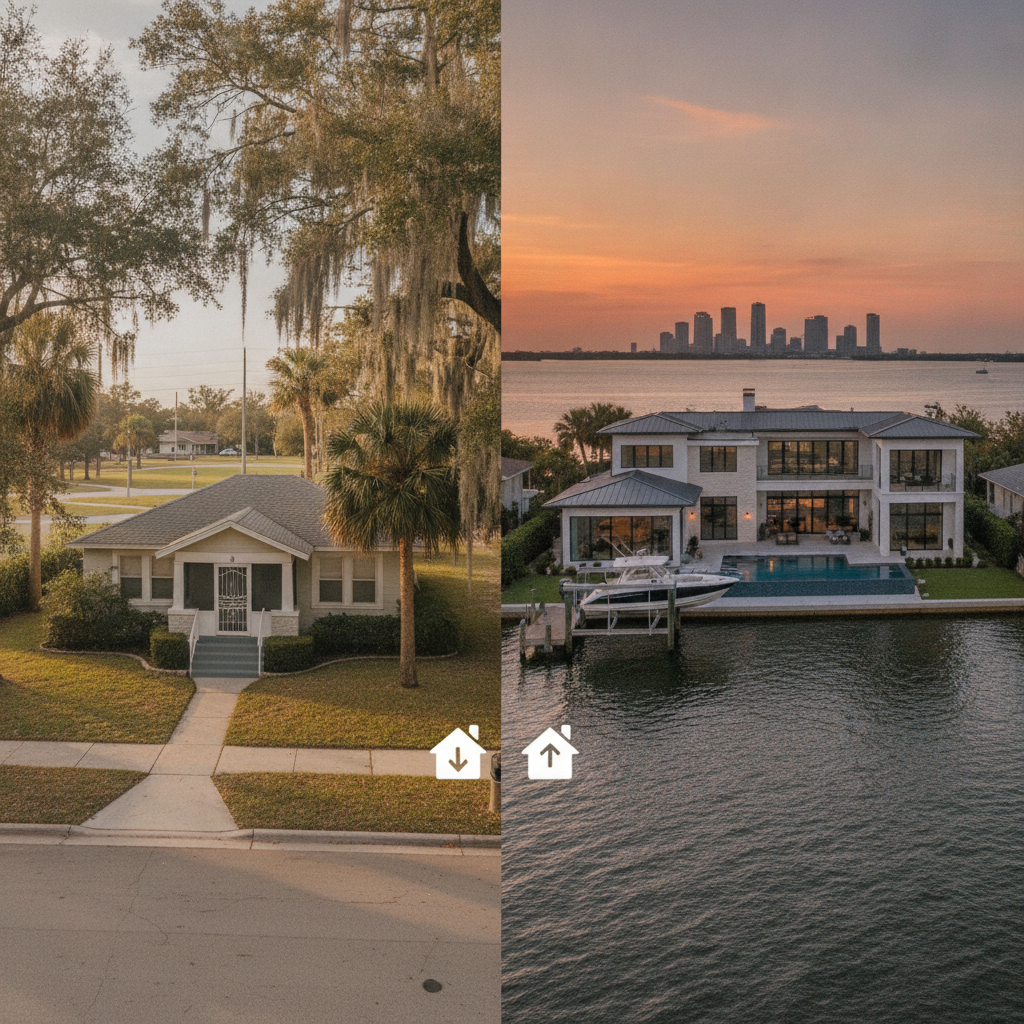
It depends on your timeline and finances. Renting avoids property taxes, insurance premiums, and maintenance costs, which have risen sharply in coastal Florida. Buying builds equity and can stabilize housing costs long-term, but requires a larger upfront commitment and ongoing exposure to insurance and tax increases. Many retirees rent for the first year to evaluate neighborhoods before buying.
Property Taxes, Insurance, and the Hidden Costs of Homeownership
Florida's property tax system is more favorable than many states, but it's not zero — and insurance has become the real affordability pressure point. Effective property tax rates are reported at roughly 0.82% in Hillsborough County and 0.67% in Pinellas County, though your actual bill depends on assessed value, homestead exemptions, municipality, and non-ad-valorem assessments like stormwater fees.
Homeowners insurance, and in many coastal or flood-zone areas, separate flood insurance, has risen substantially across the Tampa Bay region in recent years due to hurricane exposure and reinsurance costs. For retirees evaluating the full cost of living in Tampa Bay, it's essential to request a current insurance quote before making an offer — not just rely on the seller's existing policy, which may not transfer or may be priced differently for a new owner.
Condominium buyers should also budget carefully for HOA dues, which increasingly reflect higher insurance and reserve-funding requirements following statewide structural-safety reforms. A condo with a low purchase price can still carry a high monthly cost once dues, special assessments, and insurance pass-throughs are factored in — another reason the cost of living in Tampa Bay for retirees depends heavily on the specific property, not just the sale price.
Healthcare and Everyday Living Expenses for Retirees
Healthcare is often the second-largest expense category for retirees, and Tampa Bay generally performs well here. Local estimates place retiree out-of-pocket healthcare costs around $400–$700 per month for Medicare supplement premiums, prescriptions, and routine care, while some national cost-of-living indexes place Tampa-area healthcare costs roughly 7%–8% below the national average.
Everyday living expenses round out the picture:
- Utilities: Electricity, water, trash, and internet typically total $250–$375 per month, with summer air-conditioning use driving higher electric bills.
- Groceries: Generally near or slightly below the national average, though prices vary by store and proximity to major retailers.
- Transportation: Many retirees reduce costs by downsizing to one vehicle, though Tampa Bay's spread-out layout makes car ownership nearly essential outside a few walkable urban pockets.
- Entertainment and dining: Highly variable, but the region's abundance of free beaches, parks, and community events helps keep discretionary costs manageable.
Most retirees budget roughly $400 to $700 per month for Medicare premiums, supplemental coverage, and routine medical expenses, though this figure rises significantly for those with chronic conditions or anticipated long-term-care needs.
Taxes and Retirement Income: Why Florida Stands Out
One of the biggest advantages affecting the cost of living in Tampa Bay for retirees is Florida's tax structure. The state levies no personal income tax, which means Social Security benefits, pension distributions, and withdrawals from 401(k)s or IRAs are not taxed at the state level. This can translate into meaningful annual savings compared to states with income taxes on retirement withdrawals.
Florida also has no estate tax or inheritance tax, which matters for retirees doing legacy and estate planning. The primary tax obligations retirees will encounter locally are property taxes (for homeowners), sales tax on purchases (Florida's base rate is 6%, with county surtaxes in some areas), and any applicable federal taxes on retirement income, which are unaffected by state of residence.
No. Florida has no state personal income tax, so Social Security benefits, pensions, and withdrawals from retirement accounts are not taxed at the state level — though federal taxes may still apply depending on your overall income.
Monthly Budget Breakdown: What Retirees Actually Spend in Tampa Bay
Putting the pieces together, here's a realistic monthly budget range for a retired couple evaluating the cost of living in Tampa Bay for retirees, assuming homeownership with a paid-off or low mortgage balance:
| Category | Estimated Monthly Range |
|---|---|
| Housing (property tax, insurance, maintenance) | $800–$1,800 |
| Mortgage (if applicable, $320K loan at ~6.5%) | $1,800–$2,200 |
| Utilities | $250–$375 |
| Healthcare (out-of-pocket) | $400–$700 |
| Groceries and dining | $600–$900 |
| Transportation | $300–$500 |
| Entertainment/discretionary | $300–$600 |
Totaled, a mortgage-free retired couple often lands near $3,000–$4,500 per month, while a couple still carrying a mortgage should plan closer to $4,500–$6,500. These figures exclude long-term-care insurance, major home repairs, or hurricane-related special assessments, all of which should be budgeted as separate reserves.
How to Estimate Your Own Tampa Bay Retirement Budget
- Start with housing: Get a real insurance quote and property tax estimate for any home you're seriously considering, not just the listing price.
- Add healthcare: Factor in Medicare premiums, supplemental plans, and expected out-of-pocket costs based on your health history.
- Layer in utilities and daily living: Use the ranges above as a baseline, then adjust for your personal lifestyle and household size.
- Build a hurricane reserve: Set aside funds for deductibles, temporary relocation, or uninsured repairs after major storms.
- Stress-test the number: Add a 10–15% buffer for insurance premium increases, which have been common across coastal Florida.
Choosing the Right Tampa Bay Community for Your Retirement Budget
Because the cost of living in Tampa Bay for retirees varies so much by location, choosing the right submarket matters as much as choosing the right house. Pasco County and inland Hillsborough County generally offer lower home prices and property tax bills, making them attractive for retirees prioritizing affordability. Pinellas County, with its beaches and walkable downtowns like St. Petersburg and Clearwater, commands a premium but offers lifestyle advantages that many retirees consider worth the trade-off.
Age-restricted and active-adult communities are worth special consideration, as they often bundle amenities, lower-maintenance living, and sometimes lower insurance costs into the HOA structure. Condominiums can offer lower entry prices but require close scrutiny of reserve funds and association insurance, especially following statewide reforms affecting older buildings.
Working with a broker who understands these nuances across Hillsborough, Pinellas, and Pasco counties can help you avoid surprises. If you're exploring neighborhoods or want a personalized estimate of what your retirement budget could look like in a specific area, the team at Hollister Real Estate can walk you through current listings, tax estimates, and insurance considerations for your target communities.
Frequently Asked Questions
What is a realistic monthly cost of living in Tampa Bay for retirees?
Most retired couples should plan for $4,000 to $6,000 per month, covering housing, insurance, healthcare, utilities, and daily living expenses, excluding major medical or long-term-care costs.
Is Tampa Bay affordable compared to other Florida retirement destinations?
Tampa Bay is generally more affordable than South Florida and many coastal markets, with median home prices around $385,000–$400,000, though it remains higher than some inland Florida regions. Pasco County typically offers the lowest entry point within the metro.
How much are property taxes for retirees in Tampa Bay?
Effective property tax rates are approximately 0.82% in Hillsborough County and 0.67% in Pinellas County, though your actual bill depends on assessed value, homestead exemptions, and local non-ad-valorem fees.
Does Florida's lack of income tax really help retirees in Tampa Bay?
Yes. Florida has no state personal income tax, so Social Security, pensions, and retirement account withdrawals are not taxed at the state level, which can offset higher insurance and housing costs compared to other states.
What is the biggest hidden cost retirees overlook in Tampa Bay?
Homeowners insurance and flood insurance are the most commonly underestimated costs. Premiums have risen significantly in coastal and flood-prone areas, so it's important to get a current quote before purchasing rather than relying on the seller's existing policy.
Final Thoughts on the Cost of Living in Tampa Bay for Retirees
The cost of living in Tampa Bay for retirees offers real advantages — no state income tax, below-average healthcare costs, and a wide range of housing options from affordable Pasco County communities to premium Pinellas County waterfront homes. The trade-off is rising insurance costs and property values that require careful, location-specific budgeting rather than relying on national averages.
If you're planning a retirement move and want a clear-eyed view of what your dollars will stretch to in Tampa, St. Petersburg, Wesley Chapel, or the surrounding areas, reach out to Hollister Real Estate for a personalized consultation. Kyle Hollister can help you compare neighborhoods, estimate carrying costs, and find a home that fits both your lifestyle and your retirement budget.