Is Tampa Bay a Good Place to Invest in Real Estate?
October 24, 2026 · 13 min read

Is Tampa Bay a good place to invest in real estate in 2026? The short answer is yes, but with important caveats. After years of breakneck appreciation, Tampa Bay has settled into a more balanced, selective market where cash flow, insurance costs, and realistic rent growth matter far more than simply betting on rising prices. This guide breaks down the current data, the opportunities, and the risks so you can decide for yourself whether Tampa Bay is a good place to invest in real estate given your specific goals, budget, and risk tolerance.
TL;DR — The Bottom Line
Is Tampa Bay a good place to invest in real estate right now? Yes, for disciplined buyers who underwrite insurance, property taxes, vacancy, and modest rent growth rather than assuming rapid appreciation. Prices and rents have cooled, inventory is up roughly 11% year over year, and buyers have meaningfully more negotiating leverage than during the pandemic boom. Multifamily fundamentals remain active but uneven due to new supply. The best opportunities favor investors who run conservative numbers, negotiate hard, and choose the right asset type and submarket.
Quick Facts
- Median listing price (Tampa): approximately $449,900
- Average Tampa home value (Zillow): approximately $375,619, up only 0.4% year over year
- Typical time to pending: approximately 31–32 days
- Homes selling below list price: approximately 64% of sales
- Tampa Bay active listings: roughly 7,603 homes for sale, up about 11% year over year
- Multifamily occupancy: approximately 91–91.4% region-wide amid new supply deliveries
Is Tampa Bay a Good Place to Invest in Real Estate? The Quick Answer
For most investors evaluating the region today, Tampa Bay is a good place to invest in real estate — provided expectations are grounded in current data rather than 2021-era appreciation rates. The market has shifted from a rapid, nearly guaranteed price-growth story to a selective, cash-flow-and-risk-management environment. That shift isn't necessarily bad news. It means disciplined buyers can negotiate better terms, inspect properties more thoroughly, and underwrite deals with more realistic assumptions.
Answering the question "is Tampa Bay a good place to invest in real estate" honestly requires separating headline metro statistics from the reality on the ground in specific counties, neighborhoods, and property types. A single-family rental in a stable Pinellas County neighborhood behaves very differently than a new-construction condo competing against thousands of newly delivered apartment units. Investors who do this homework consistently outperform those who buy based on general market sentiment alone.
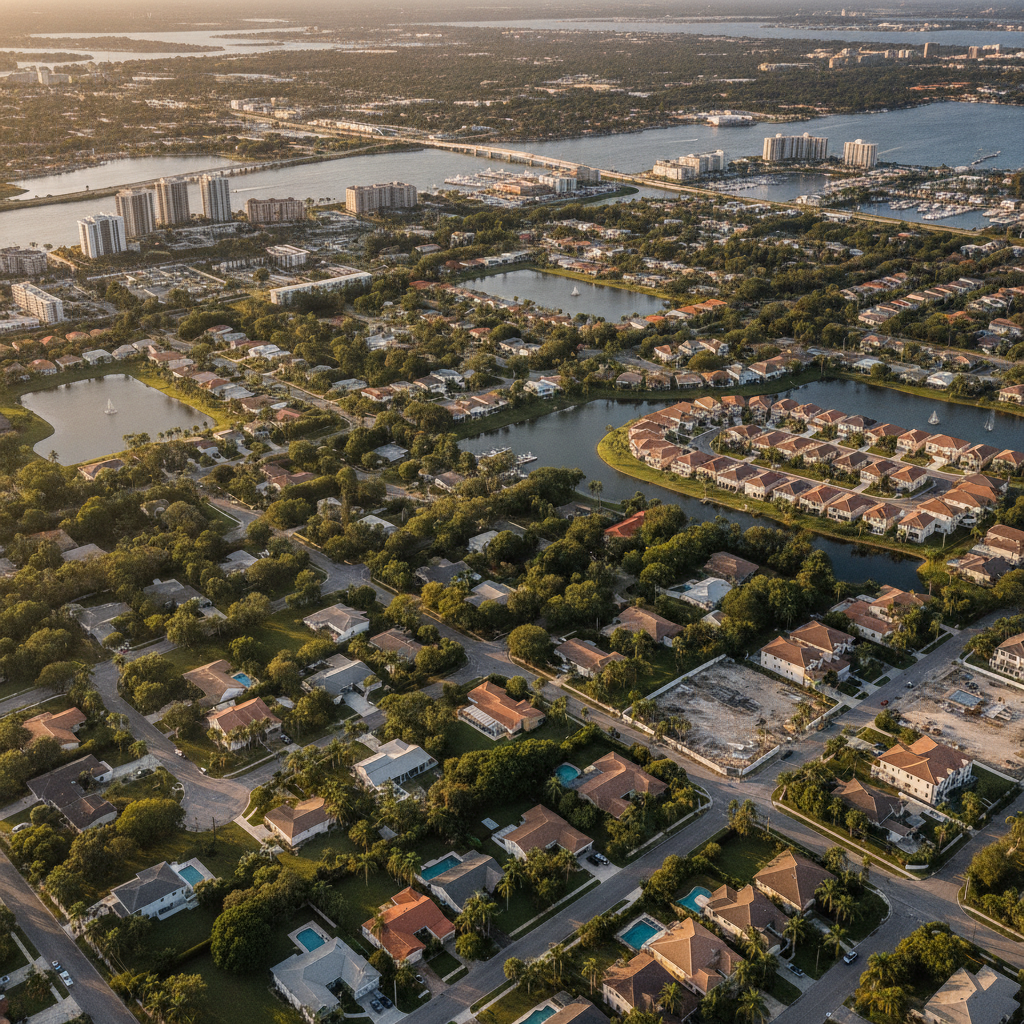
Tampa Bay Real Estate Market Snapshot: Key Numbers for 2026
Before deciding whether Tampa Bay is a good place to invest in real estate, it helps to look at several independent data sources side by side, since methodology and geography differ meaningfully.
| Metric | Figure | Source |
|---|---|---|
| Median listing price (Tampa) | ~$449,900 | Realtor.com Research |
| Median rent (Tampa) | ~$2,100/month | Realtor.com Research |
| Average home value | ~$375,619 (+0.4% YoY) | Zillow Research |
| Days to pending | ~32 days | Zillow Research |
| Sold below list price | ~64% of sales | Zillow Research |
| Tampa Bay active listings | ~7,603 homes | Redfin Data Center |
| Median sale price (Tampa Bay) | ~$383,333 | Redfin Data Center |
These figures tell a consistent story: prices have stabilized or softened slightly, homes are taking longer to sell, and a majority of properties close below asking price. That combination is precisely why many investors are asking whether Tampa Bay is a good place to invest in real estate today rather than waiting for the next appreciation cycle. Softer pricing combined with available inventory often creates better entry points than frothy, low-inventory markets.
Answer: Often yes. Out-of-state buyers benefit from increased negotiating leverage, more available inventory, and the ability to request concessions like repair credits or rate buydowns. However, remote investors should budget extra time for insurance shopping and property inspections, since Tampa Bay's storm exposure requires more diligence than many other U.S. markets.
Why Investors Still Consider Tampa Bay a Good Place to Invest in Real Estate
Despite cooling price growth, Tampa Bay retains structural advantages that keep it on investors' shortlists. The regional economy is diversified across healthcare, tourism, logistics, defense-related activity, education, and professional services, which supports long-term housing demand even as new-home construction activity has softened in 2026. Employment-center investment and continued relocation interest — including professionals, retirees, and remote or hybrid workers — help sustain both rental demand and resale liquidity.
This is a key reason many analysts still conclude that Tampa Bay is a good place to invest in real estate over a multi-year horizon, even though short-term appreciation has slowed. Population-driven demand is a long-term tailwind, not a guarantee of immediate returns. Investors who treat it as the latter often overpay; those who treat it as a backdrop for sound underwriting tend to do better.
Buyer Negotiating Power: A New Dynamic in the Tampa Bay Market
One of the most important shifts for investors is that Tampa Bay is no longer a uniformly seller-dominated market. Active listings ended 2025 roughly 11% higher than the prior year, giving buyers meaningfully more choice than during the supply-constrained pandemic years. Longer marketing periods and a high share of below-list sales create real negotiating leverage, including:
- Price reductions below original list price
- Seller-paid closing costs
- Mortgage-rate buydowns
- Repair credits identified during inspection
- Extended inspection and due-diligence periods
- Insurance contingencies tied to underwriting approval
For investors, negotiating these terms can improve returns more reliably than waiting for market-wide appreciation. This is part of why, when people ask whether Tampa Bay is a good place to invest in real estate, the honest answer depends heavily on negotiating skill and patience, not just timing the broader market.
Multifamily and Rental Market Fundamentals in Tampa Bay
Tampa Bay's multifamily sector illustrates both the opportunity and the complexity facing rental property investors. The region absorbed substantial new supply in the first half of 2026, with approximately 2,825 units delivered across nine buildings, according to Yardi Matrix. Absorption exceeded 2,500 units, up roughly 32.3% year over year, signaling genuine tenant demand even amid heavy construction activity.
| Multifamily Metric | Figure | Source |
|---|---|---|
| Units delivered (H1 2026) | ~2,825 units / 9 buildings | Yardi Matrix |
| Absorption | 2,500+ units (+32.3% YoY) | Yardi Matrix |
| Stabilized occupancy | ~91.4% (Downtown St. Pete ~92.6%) | Yardi Matrix |
| Effective rent | ~$1,806/month (-4.9% YoY) | Apartment List Research |
| Vacancy rate | ~5.65%; avg rent ~$1,791 (-3.16% YoY) | RentCafe / CoStar Market Data |
These numbers show tenant demand is real, but new apartments and build-to-rent communities are giving renters more options, which limits landlords' ability to raise rents quickly. For an investor weighing rental property, this nuance matters: Tampa Bay is a good place to invest in real estate for long-term rental income, but near-term rent growth assumptions should be conservative rather than aggressive.
Key Risks Every Investor Must Underwrite in Tampa Bay
No honest answer to "is Tampa Bay a good place to invest in real estate" can ignore the risk side of the ledger. The most consequential variables include:
- Insurance costs and storm exposure: Property and flood insurance premiums are one of the single largest variables in Tampa Bay underwriting and can erase otherwise attractive cash flow if not quoted before closing.
- Property taxes and assessments: Tax bills can shift meaningfully after a sale due to reassessment, affecting net operating income.
- Vacancy and softening rents: With multifamily effective rents down roughly 3–5% year over year in several reports, single-family rentals also face competitive pressure from newer apartment stock.
- Maintenance and capital expenditures: Florida's humidity and storm exposure increase long-term maintenance costs, particularly for roofs, HVAC systems, and exterior finishes.
- Slower appreciation: With average home values up only 0.4% year over year, investors should not rely on short-term appreciation to offset weak cash flow.
Answer: It can be, if you prioritize cash flow over speculation. Risk-averse investors should favor properties in established neighborhoods with stable insurance costs, run conservative rent projections, and build larger reserves for maintenance and vacancy than they might in a lower-risk climate market.
How to Decide If Tampa Bay Is a Good Place to Invest in Real Estate for You
Rather than relying on a single metro-wide number, work through a structured evaluation process before committing capital:
- Define your investment goal. Decide whether you're prioritizing cash flow, long-term appreciation, a future retirement home, or a short-term rental strategy, since each goal points to different submarkets and property types.
- Get a real insurance quote before you fall in love with a property. Insurance costs vary widely by flood zone, construction type, and roof age, and can make or break your returns.
- Underwrite conservative rent growth. Given current data showing flat to declining rents in several reports, avoid pro formas that assume aggressive annual rent increases.
- Compare at least three submarkets. Pricing, rent demand, and new-supply pressure vary significantly between Tampa, St. Petersburg, Clearwater, and surrounding counties.
- Negotiate using current leverage. With inventory up and a majority of homes selling below list price, request credits, inspection concessions, or rate buydowns rather than accepting list price.
- Work with a broker who thinks like an investor. A knowledgeable local partner can help you stress-test assumptions before you sign a contract. Kyle Hollister works directly with Tampa Bay buyers and investors to evaluate deals with this exact framework.
Frequently Asked Questions
Is Tampa Bay a good place to invest in real estate in 2026?
Yes, for investors who underwrite conservatively. Prices have stabilized, with Zillow reporting average home values up just 0.4% year over year, while inventory has grown roughly 11%. This gives disciplined buyers negotiating leverage, but it also means returns depend more on smart purchase decisions than on broad appreciation.
Is Tampa Bay real estate overpriced right now?
Not dramatically, based on current data. Median listing prices near $449,900 and roughly 64% of homes selling below asking price suggest the market has cooled from pandemic-era highs, giving buyers more room to negotiate fair pricing rather than competing in bidding wars.
What are the biggest risks of investing in Tampa Bay real estate?
The top risks are rising insurance costs tied to storm and flood exposure, property tax reassessment after purchase, softening rents in the face of new multifamily supply, and ongoing maintenance costs related to Florida's climate. Investors should quote insurance and run conservative rent assumptions before closing.
Is now a good time to buy investment property in Tampa Bay?
It can be a strong time for buyers who negotiate well, since homes are taking roughly 31–32 days to go pending and a majority sell below list price. Rather than timing a market bottom, focus on individual property fundamentals: insurance costs, realistic rent, and purchase price relative to comparable sales.
How does Tampa Bay compare to other Florida markets for real estate investors?
Tampa Bay offers a more diversified economy and larger rental pool than many smaller Florida metros, but it also faces heavier new multifamily supply and rising insurance costs. Investors should compare submarket-level data rather than assuming Tampa Bay behaves identically to Orlando, Jacksonville, or South Florida markets.
Conclusion: Is Tampa Bay a Good Place to Invest in Real Estate?
So, is Tampa Bay a good place to invest in real estate? For investors willing to do the homework — quoting insurance early, underwriting realistic rents, comparing submarkets, and negotiating from a position of knowledge — the answer is yes. The market's shift from rapid appreciation to a more balanced, negotiable environment actually favors careful buyers over speculative ones. The opportunities are real, but so are the risks, and the investors who succeed in Tampa Bay today are the ones who treat every deal as its own underwriting exercise rather than a bet on the metro average.
If you're evaluating whether Tampa Bay is a good place to invest in real estate for your specific situation, a local, investor-minded perspective can save you from costly assumptions. Connect with Kyle Hollister to review current listings, run the numbers on a specific property, or build a buying strategy suited to your goals and risk tolerance in today's Tampa Bay market.