Tampa Bay Real Estate Market Trends 2024 Predictions
November 9, 2026 · 13 min read

If you're trying to time a purchase or a sale in Florida's Gulf Coast metro, understanding tampa bay real estate market trends 2024 predictions is essential before you sign a contract. The market has shifted meaningfully from the frenzied bidding wars of 2021 and 2022 toward something closer to balance, and both buyers and sellers who misread that shift risk leaving money on the table. This guide from Kyle Hollister breaks down what actually happened, what the latest indicators show, and what to expect next.
TL;DR — The Bottom Line
Tampa Bay real estate market trends 2024 predictions point to a more balanced, buyer-friendly environment: median prices have softened slightly, homes are sitting on the market longer (around 73 days), mortgage rates near or above 7% continue to squeeze affordability, and rising insurance costs are now a bigger factor in pricing than low inventory. Sellers who price realistically and present well-maintained, insurable homes are still closing deals — but the days of effortless bidding wars are over, at least for now.
Quick Facts
- Median sale price: approximately $369,000 (Tampa metro, September 2026 data), down 0.3% year over year
- Active listings: 19,585, down 7.2% year over year, showing uneven supply growth
- Median days on market: 73 days, up from 69 days a year earlier
- Mortgage rate impact: a rise from roughly 6.66% to 7.40% cuts buying power by about $22,000 on a $2,000/month payment
- Multifamily rents: effective rents down 4.7% year over year through Q2 2026 amid new apartment supply
Tampa Bay Real Estate Market Trends 2024 Predictions: Current Market Snapshot
The clearest way to understand tampa bay real estate market trends 2024 predictions is to look at what actually happened to prices, inventory, and speed of sale rather than relying on headlines. The region moved decisively away from the extreme seller's market that defined 2020 through 2022. Instead of multiple offers within hours of listing, homes now commonly sit for weeks, and sellers are negotiating on price, closing costs, and repairs far more often than in prior years.
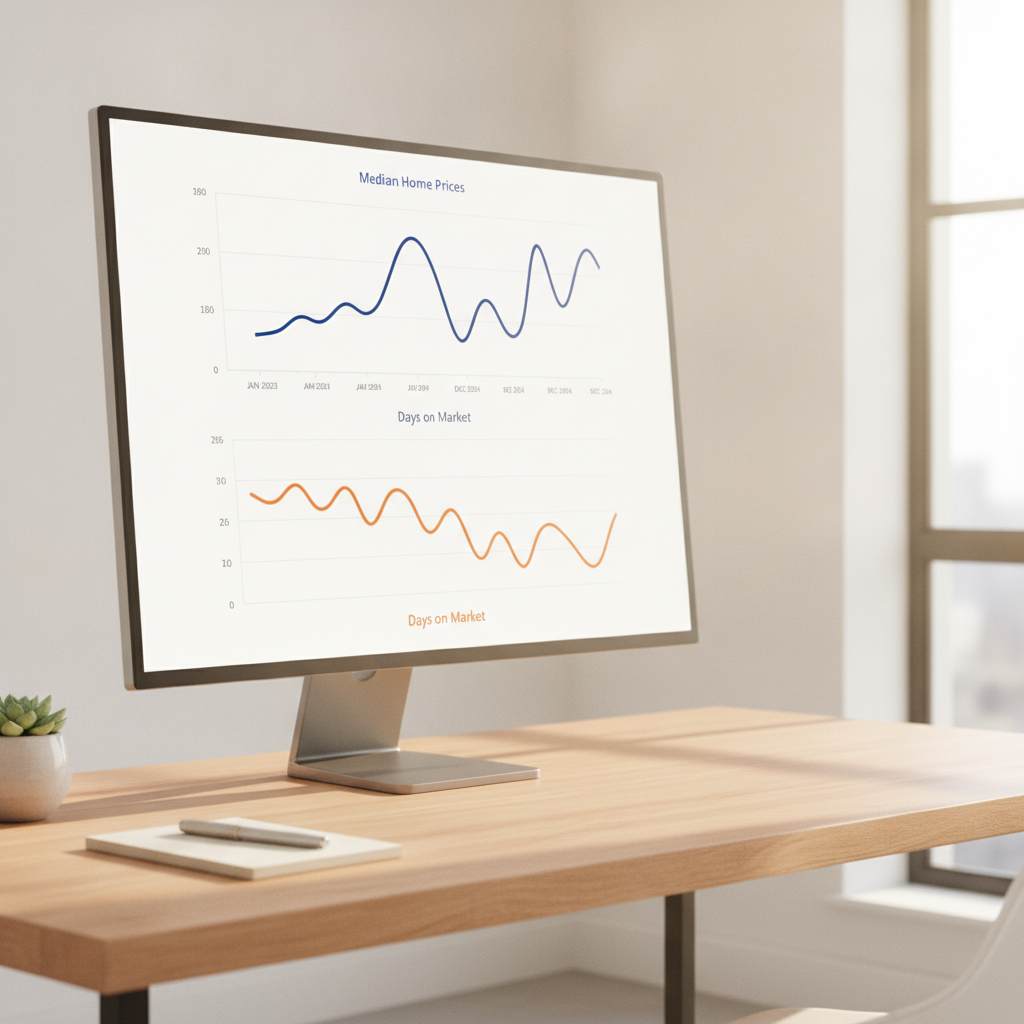
According to Redfin's housing data for the Tampa metro area, the median sale price registered near $369,000 in the most recent reporting period, down 0.3% year over year and 2.2% month over month (Redfin Data Center). That is not a crash — it is a gradual cooling that reflects affordability pressure more than a collapse in demand.
| Indicator | Latest Reading | What It Means |
|---|---|---|
| Median sale price | ~$369,000 | Down slightly year over year; modest softening, not a correction |
| Active listings | 19,585 | Down 7.2% year over year; supply growth is inconsistent by submarket |
| Median days on market | 73 days | Up from 69 days; buyers have more time to decide |
| Mortgage rates | Near or above 7% | Primary constraint on affordability, not inventory |
Any reliable set of tampa bay real estate market trends 2024 predictions has to account for the fact that affordability, not a shortage of willing buyers, is now the dominant force shaping outcomes.
What's Driving the 2024 Shift: Rates, Inventory, and Insurance
Three forces explain most of what's behind current tampa bay real estate market trends 2024 predictions: elevated mortgage rates, uneven inventory growth, and rising insurance costs.
Mortgage rates reduced purchasing power
Rates near or above 7% have materially changed what buyers can afford. A buyer budgeting $2,000 per month in principal and interest could afford roughly $22,000 less home when rates rose from approximately 6.66% to 7.40% (Freddie Mac Primary Mortgage Market Survey). That single variable has done more to slow Tampa Bay sales than any local policy change.
Inventory grew — but unevenly
Compared to the historically tight conditions of 2020–2022, Tampa Bay buyers now have more choices. But that growth has not been uniform. Newer, move-in-ready homes still attract strong competition, while older homes needing roof, electrical, plumbing, or flood-related repairs sit longer and sell for less.
Insurance costs reshaped affordability math
Homeowners insurance and flood insurance now factor heavily into buyer decisions. Many buyers evaluate total monthly cost of ownership rather than mortgage payment alone, and properties with aging roofs or coastal exposure face longer marketing periods and lower offers.
Based on current data, Tampa Bay has moved into a more balanced-to-buyer-leaning market. Rising days on market (73 days), modest price softening, and increased negotiating room all point toward buyers gaining leverage, even though low-rate-locked homeowners continue to limit overall supply.
Price Predictions: What Tampa Bay Sellers Should Expect
Sellers reading into tampa bay real estate market trends 2024 predictions should expect flat-to-slightly-declining prices rather than the double-digit appreciation common in 2021. The most recent data shows prices down only 0.3% year over year, which suggests stabilization rather than a sharp downturn. Realistic pricing from day one — rather than testing the market high and reducing later — consistently produces better outcomes.
Sellers of well-maintained, move-in-ready homes in desirable school zones or flood-safe locations continue to see reasonably strong demand. Sellers of older homes with insurance complications, deferred maintenance, or above-market pricing are the ones absorbing most of the slowdown.
Inventory, Days on Market, and Negotiating Power for Buyers
One of the most actionable parts of any tampa bay real estate market trends 2024 predictions discussion is what it means for negotiating leverage. Median days on market reached 73 days, up from 69 a year earlier, giving buyers meaningfully more time to inspect, negotiate, and walk away from deals that don't pencil out.
| Period | Market Character | Buyer Leverage |
|---|---|---|
| 2020–2022 | Extreme seller's market | Minimal; frequent bidding wars |
| 2023 | Transitional | Moderate; rates begin to bite |
| 2024–present | Balanced to buyer-leaning | Stronger; concessions common |
In practice, this means buyers are more frequently securing seller-paid closing cost credits, repair allowances, and in some cases mortgage-rate buydowns — concessions that were rare just two years earlier.
The Insurance Factor Reshaping Tampa Bay Real Estate
No accurate set of tampa bay real estate market trends 2024 predictions can ignore insurance. Rising premiums and insurer availability issues have become a central constraint on transactions, sometimes more decisive than price itself. Properties with older roofs, prior storm claims, or coastal flood exposure can face:
- Longer marketing periods while buyers shop for coverage
- Greater inspection-related renegotiation after underwriting surprises
- Lower final offers to offset higher carrying costs
- Financing delays or denials if adequate coverage isn't available
Buyers evaluating Tampa Bay listings should request recent insurance quotes early in the process rather than waiting until underwriting, since surprises here can derail closings that otherwise looked solid.
Rental Market and Investor Considerations for 2024
Investors following tampa bay real estate market trends 2024 predictions should pay close attention to the apartment sector, since new multifamily supply is reshaping rental economics. Effective multifamily rents declined 4.7% year over year through Q2 2026 as new apartment construction increased competition and gave renters more negotiating power (RealPage Market Analytics).
It depends on the submarket and property type. Softer rents from new apartment supply compress returns on comparable rental units, but single-family and townhome rentals in strong school districts have generally held up better than Class A apartment product. Underwriting should assume flat or slightly declining rent growth for at least the next 12–18 months.
For investors, this means recalculating cash-flow assumptions with more conservative rent growth and factoring in rising insurance and property tax costs when modeling returns.
Actionable Strategies: Buyer and Seller Predictions for Tampa Bay in 2024
For buyers
- Get fully underwritten, not just pre-qualified. With rates volatile, a full underwriting review protects your negotiating position and avoids last-minute surprises.
- Request insurance quotes before writing an offer. This avoids discovering unaffordable premiums after you're already under contract.
- Negotiate beyond price. Ask for closing-cost credits, rate buydowns, or repair allowances — all increasingly available in the current market.
- Prioritize condition over cosmetics. Roof age, electrical systems, and flood zone status matter more to long-term cost than paint colors or finishes.
For sellers
- Price to the current data, not last year's comps. Overpricing in a slower market leads to stale listings and larger eventual price cuts.
- Address insurance-related issues proactively. A newer roof or updated electrical panel can be the difference between a quick sale and 73-plus days on market.
- Be ready to offer concessions. Closing-cost credits or minor repair allowances often close deals faster than repeated price reductions.
- Market to the right buyer pool. First-time buyers and relocating professionals remain active even as overall demand softens.
Buyers and sellers who want a second opinion on pricing, timing, or negotiation strategy can review current listings and get in touch through Kyle Hollister's Tampa Bay real estate site before making a move.
Looking Ahead: Tampa Bay Real Estate Market Trends 2024 Predictions Into 2025
Most forward-looking tampa bay real estate market trends 2024 predictions suggest continued stabilization rather than a sharp reversal in either direction. Barring a significant drop in mortgage rates, expect:
- Prices holding roughly flat, with pockets of modest decline in insurance-challenged or older housing stock
- Days on market remaining elevated compared to the 2021–2022 peak frenzy
- Continued buyer leverage on concessions, particularly for homes priced above market
- Rental softness persisting in newer apartment submarkets as supply absorbs
"Tampa Bay's 2024 housing story isn't about collapsing prices — it's about affordability, insurance, and patience reshaping who has the upper hand at the negotiating table."
Buyers who were priced out during the pandemic boom may find 2024 and early 2025 offer the best combination of selection and negotiating room seen in several years, provided they can manage current mortgage rates. Sellers who adapt pricing strategy to this reality, rather than anchoring to 2021 highs, are the ones closing deals efficiently.
Frequently Asked Questions
What are the main tampa bay real estate market trends 2024 predictions for home prices?
Current data shows Tampa's median sale price near $369,000, down modestly (about 0.3%) year over year, suggesting continued stabilization rather than a sharp correction or a return to rapid appreciation.
Is Tampa Bay currently a buyer's or seller's market?
It's trending toward a balanced-to-buyer-leaning market, with median days on market at 73 (up from 69 a year prior) and more frequent price concessions and closing-cost credits.
How are mortgage rates affecting Tampa Bay buyers in 2024?
Rates near or above 7% significantly reduce purchasing power — a shift from roughly 6.66% to 7.40% can reduce what a buyer with a $2,000 monthly budget can afford by about $22,000.
Why is insurance such a big factor in Tampa Bay real estate right now?
Rising homeowners and flood insurance premiums have become a key constraint on affordability and financing, sometimes more decisive to a deal than the sale price itself, especially for older homes or coastal properties.
Should investors still buy rental property in Tampa Bay in 2024?
Yes, selectively — but investors should underwrite with flatter or slightly declining rent growth assumptions given a 4.7% year-over-year drop in effective multifamily rents, and factor in rising insurance and tax costs.
Conclusion: Making Sense of Tampa Bay Real Estate Market Trends 2024 Predictions
The data behind tampa bay real estate market trends 2024 predictions tells a consistent story: this is a market defined by affordability constraints, elevated mortgage rates, and insurance pressure — not collapsing demand. Buyers have more leverage than they've had in years, while sellers who price realistically and address condition and insurability issues are still closing deals efficiently. Whether you're buying your first home, relocating to the area, or managing an investment portfolio, understanding these dynamics before you enter a contract is the difference between a smooth transaction and a costly misstep.
If you'd like a personalized read on how these trends apply to your specific neighborhood, price range, or investment goals, connect with Kyle Hollister for a data-driven consultation tailored to today's Tampa Bay market.