Tampa Bay Rental Market Trends: A 2026 Guide for Renters
September 5, 2026 · 13 min read
Understanding Tampa Bay rental market trends has never been more important for renters, homeowners, and investors alike. After years of blistering rent growth, the region has swung firmly into renter-friendly territory, with apartment vacancy at historic highs even as single-family rentals hold their ground. Whether you're searching for a new lease, weighing a move to the area, or evaluating an investment property, the data tells a clear story: 2026 is a market defined by negotiating power, oversupply in multifamily housing, and a widening gap between apartment and single-family rent performance.
TL;DR — The Bottom Line
Tampa Bay rental market trends in 2026 show apartment rents softening (down roughly 1-5% year-over-year) amid record-high vacancy near 10.7%, while single-family home rentals remain resilient with rents around $2,600/month, up about 4% year-over-year. Heavy new apartment construction has outpaced renter demand, giving tenants more leverage on price and concessions, while investors need to underwrite conservatively and focus on location quality rather than expecting the double-digit rent growth of 2021-2023.
Quick Facts
- Average apartment rent (March 2026): ~$1,768/month, down about 1% year-over-year
- Apartment vacancy rate (early 2026): ~10.7%, the highest recorded in over two decades
- Median single-family rental rate: ~$2,600/month, up roughly 4% year-over-year
- Projected new apartment units delivered in 2026: approximately 7,559 units, a ~4.5% inventory expansion
- Metro median asking rent (all housing types): approximately $1,635-$2,248/month depending on the data source and month measured
Tampa Bay Rental Market Trends: The 2026 Snapshot
The most important thing to understand about current Tampa Bay rental market trends is the split personality between apartments and single-family homes. Apartment rents are flat to declining, while detached-home rentals continue posting modest gains. This divergence is the single biggest theme shaping decisions for renters and investors throughout Hillsborough, Pinellas, and Pasco counties.
On the apartment side, average effective rent in Tampa sat near $1,768 per month in March 2026, down about 1% from a year earlier. Some regional trackers put average rent closer to $2,013 in April 2026, also down roughly 1.9% year-over-year, while Realtor.com's July 2026 snapshot showed a median rent of $1,635, nearly 5% lower than the same month in 2025. The exact figure varies by data provider and methodology, but the direction is consistent: rents are softening.
Vacancy tells an even more dramatic story. Apartment vacancy climbed to approximately 10.7% in early 2026, according to CoStar, the highest level the firm has recorded for the Tampa metro since it began tracking data around 2000. Other regional estimates place vacancy closer to 8.9% depending on the submarket mix included. Either way, the Tampa-St. Petersburg-Clearwater metro is now widely described by analysts as a renter-friendly market, a sharp reversal from the landlord's market that defined 2021 through 2023.
Why Are Apartment Rents Falling While Single-Family Rents Climb?
The core driver behind these shifting Tampa Bay rental market trends is a straightforward supply-and-demand imbalance in the apartment sector. In the second half of 2025 alone, developers delivered roughly 3,800 new apartment units in the Tampa metro, but renter demand only absorbed about 1,060 of them — nearly a 4-to-1 gap between new supply and actual leasing activity. That imbalance is expected to persist through 2026, with an estimated 7,559 new units scheduled for delivery against forecast absorption of only about 6,126 units.
To put that in perspective, Tampa's apartment inventory is expanding by roughly 4.5% in 2026, compared to a national average closer to 2.6%. Simply put, builders responded to the rent spikes of the pandemic era by adding units faster than the region's population and household formation could soak them up, particularly in submarkets like Pasco County, Southeast Tampa, and Downtown Tampa, where cranes have been busiest.
Single-family rentals tell a very different story. Because building a new detached house is more expensive and slower than constructing an apartment complex, supply hasn't kept pace with demand for renters who want a yard, more space, or better school zones. That scarcity is why median single-family rent has climbed to around $2,600 per month, up roughly 4% year-over-year, even as apartment rents soften. Days on market for single-family rentals also run longer, around 47 days versus the national average of 35-40 days, reflecting a more selective but still resilient pool of tenants.
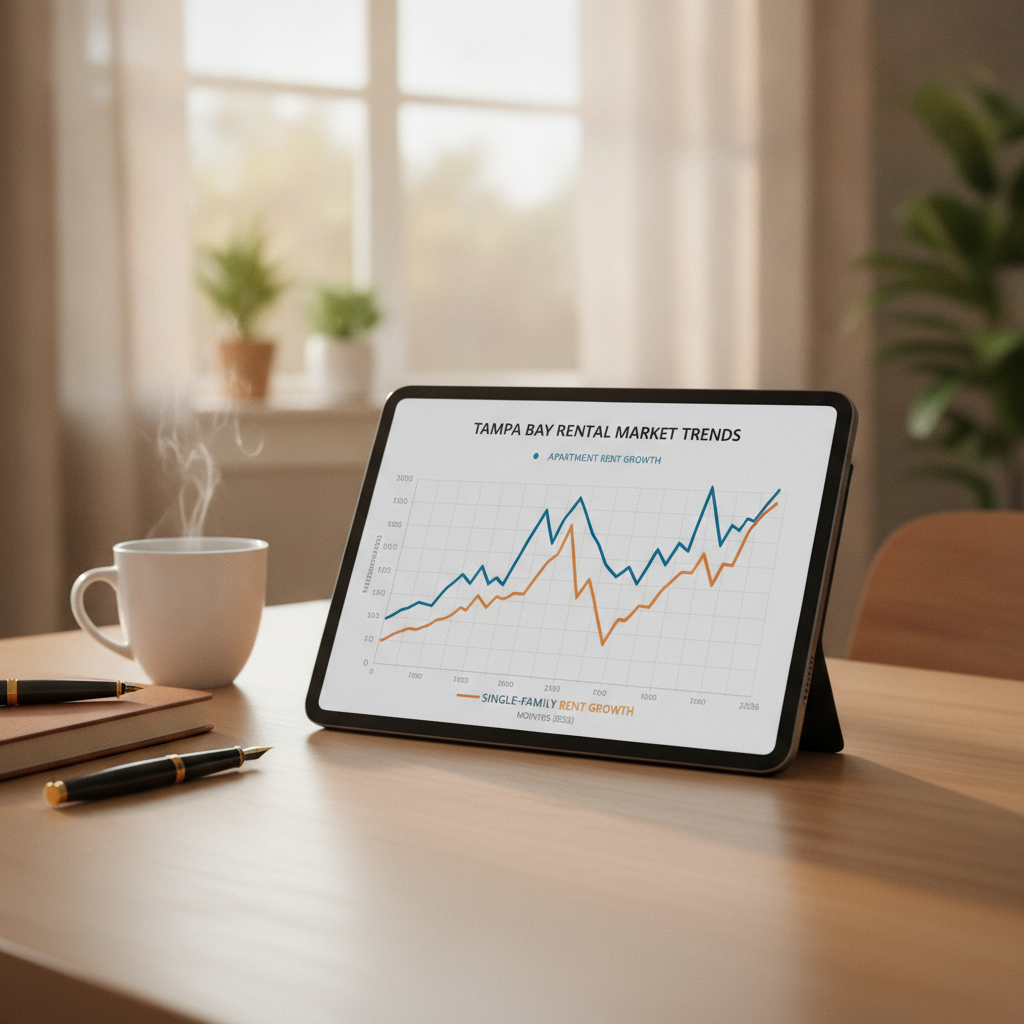
Because thousands of new apartment units have been delivered faster than renters can absorb them, pushing vacancy to record highs, while new single-family rental construction has lagged demand, keeping that segment comparatively tight.
Rental Rates by Property Type and Bedroom Count
Because Tampa Bay rental market trends vary so widely by property type, it helps to look at rents broken down by unit size. The table below reflects data gathered across CoStar and Realtor.com sources for early-to-mid 2026.
| Unit Type | Approximate Monthly Rent | Year-Over-Year Trend |
|---|---|---|
| 1-Bedroom Apartment | $1,925 | Flat to slightly down |
| 2-Bedroom Apartment | $2,369 | Flat |
| 3-Bedroom House (rental) | $2,660 | Up ~4% YoY |
| Metro Median (all types) | $1,635 - $2,248 | Down 2.5% to 4.9% YoY (varies by source) |
The takeaway: if you're comparing apartment options, you're likely to see landlords offering concessions and softer pricing. If you're hunting for a single-family rental home, expect more competition, faster-moving inventory, and less room to negotiate.
What Renters Should Know About Tampa Bay Rental Market Trends
For renters, current conditions represent the best negotiating environment Tampa Bay has seen in years. Elevated apartment vacancy — near 10.7% — means many properties are actively competing for tenants through move-in specials, reduced deposits, or a free month of rent. If you're apartment hunting, don't be afraid to ask directly about concessions; property managers in oversupplied submarkets like Downtown Tampa and Pasco County are often willing to negotiate rather than let units sit vacant.
That said, single-family rental renters shouldn't expect the same leverage. With median rents near $2,600 and inventory tighter, popular single-family homes in good school districts can still generate multiple applications. If your priority is a house rather than an apartment, moving quickly and having your documentation ready (proof of income, references, application fee) still matters.
- Shop multiple properties. With vacancy this high, comparing three or four apartment communities before signing can uncover meaningful savings.
- Ask about concessions. Free rent, reduced deposits, or waived application fees are increasingly common in oversupplied submarkets.
- Consider newer buildings. Many of the newest complexes delivered in 2025-2026 are still leasing up and often price aggressively to fill units.
- Budget for single-family competition. If you want a house rather than an apartment, expect faster decisions and less pricing flexibility.
What Investors Should Know: Underwriting in a Renter-Friendly Market
For investors, current Tampa Bay rental market trends demand a recalibration of expectations. The aggressive rent growth of 2021-2023 is gone, at least in the apartment sector, replaced by flat-to-declining rents and vacancy above 10%. That doesn't mean Tampa Bay is a bad place to invest — it means underwriting has to be more disciplined and location-specific.
Key considerations for investors evaluating rental property in this cycle:
- Stress-test your rent assumptions. Don't underwrite based on 2022-era rent growth. Model flat or even slightly negative rent growth for apartment assets over the next 12-18 months.
- Watch submarket-level supply. Pasco County, Southeast Tampa, and Downtown Tampa have absorbed the heaviest new apartment supply and are seeing the steepest rent softening. Submarkets with less new construction may hold value better.
- Consider single-family and small multifamily assets. Given the resilience of single-family rents (up ~4% YoY) compared to apartments, well-located houses or duplexes may offer more rent stability than large apartment complexes right now.
- Factor in longer lease-up and vacancy periods. With apartment vacancy near 10.7%, budget for longer time-to-lease and potential concessions when projecting cash flow.
- Focus on quality and location over yield alone. In an oversupplied environment, well-located, well-maintained properties will always lease faster and hold rents better than commodity product in saturated submarkets.
Not necessarily — it's a different time. Investors who underwrite conservatively, target submarkets with less new supply, and consider single-family or small multifamily assets can still find solid opportunities, but expectations of rapid rent growth need to be replaced with realistic, data-driven projections.
Submarkets to Watch Across Hillsborough, Pinellas, and Pasco
Not every corner of Tampa Bay is experiencing the same pressures. Understanding submarket-level Tampa Bay rental market trends is essential before signing a lease or writing an offer on an investment property.
- Pasco County: Among the heaviest concentrations of new apartment construction, leading to the steepest rent softening and highest vacancy in the region.
- Southeast Tampa: Similarly oversupplied with new multifamily product, creating strong renter leverage but tighter margins for landlords.
- Downtown Tampa: A hotspot for new luxury and mid-rise apartment towers; heavy competition among buildings has pushed many to offer concessions.
- St. Petersburg and Clearwater: Generally less new apartment supply than Tampa proper, which can mean comparatively steadier rents, though single-family inventory remains limited near the coast.
- Established single-family neighborhoods metro-wide: Because new detached-home construction hasn't kept pace with apartment building, these areas continue to see rent growth and faster-moving inventory regardless of county.
If you're relocating or investing, it pays to work with someone who tracks these submarket nuances daily rather than relying on metro-wide averages alone. At Hollister Real Estate, we monitor these hyper-local shifts across Hillsborough, Pinellas, and Pasco counties to help clients make informed decisions, whether they're signing a lease, buying a rental property, or planning an exit.
Where Are Tampa Bay Rental Market Trends Headed Next?
Looking ahead, most analysts expect the current renter-friendly conditions to persist through at least the remainder of 2026. With roughly 7,559 new apartment units still scheduled for delivery this year against projected absorption of about 6,126 units, the supply overhang isn't likely to clear quickly. That suggests apartment rents will likely remain flat to slightly negative in the near term, with vacancy staying elevated until new construction pipelines slow and population growth catches up with the added inventory.
Single-family rentals, by contrast, are expected to continue posting modest gains, supported by limited new construction of detached homes and steady demand from renters who prioritize space, yards, and school districts over apartment amenities. Investors and renters should expect this apartment-versus-house divergence to remain one of the defining features of Tampa Bay rental market trends well into 2027, unless new construction pulls back meaningfully or population growth accelerates faster than current projections.
For homebuyers considering whether to keep renting or buy, this environment adds an interesting wrinkle: with apartment rents soft, the financial case for renting short-term has strengthened somewhat, but single-family rental costs (closer to what a starter-home mortgage payment might run) mean many would-be buyers are still weighing similar monthly costs whether they rent a house or finance one.
Most data suggests rents will stay flat to slightly down for the remainder of 2026, since new apartment supply is still outpacing renter demand in several submarkets, though the exact trajectory will vary by neighborhood and building age.
Frequently Asked Questions
What are the current Tampa Bay rental market trends for apartments versus houses?
Apartment rents are flat to declining, averaging roughly $1,768 to $2,013 per month depending on the data source, with vacancy near 10.7%. Single-family rental homes are trending upward, with median rents around $2,600 per month, up about 4% year-over-year.
Why is apartment vacancy so high in Tampa Bay right now?
Developers delivered thousands of new apartment units faster than renter demand could absorb them, particularly in Pasco County, Southeast Tampa, and Downtown Tampa, pushing vacancy to roughly 10.7% in early 2026, the highest level recorded in over two decades.
Is Tampa Bay a good market for rental property investors in 2026?
It can be, but investors need to adjust expectations. Apartment assets face softer rents and higher vacancy, while single-family rentals remain comparatively resilient. Success now depends on conservative underwriting, submarket selection, and focusing on well-located, quality properties rather than expecting rapid rent growth.
How much are rents in Tampa Bay right now?
Estimates vary by data source and month, but average apartment rent is roughly $1,768-$2,013 per month, while median single-family rental homes run closer to $2,600 per month. Metro-wide median asking rent (all housing types combined) has been reported between about $1,635 and $2,248 depending on the tracker used.
Should renters expect to negotiate rent in Tampa Bay right now?
For apartments, yes — elevated vacancy near 10.7% gives renters real leverage to negotiate concessions like reduced deposits or a free month's rent. For single-family rental homes, competition remains tighter, so negotiating room is more limited.
Final Thoughts on Tampa Bay Rental Market Trends
The current wave of Tampa Bay rental market trends reflects a market recalibrating after years of rapid growth. Renters now have more choice and negotiating power than they've had in years, particularly in the apartment sector, while single-family rental homes continue to hold value thanks to constrained supply. For investors, the message is equally clear: this is a market that rewards careful underwriting, submarket knowledge, and a focus on asset quality over speculative rent growth assumptions.
Whether you're a renter trying to time your next lease, a first-time landlord evaluating a purchase, or an experienced investor rebalancing a portfolio, understanding these shifting dynamics is essential to making a confident decision in today's Tampa Bay housing market. If you'd like personalized guidance on how these trends apply to your specific situation, reach out to Kyle Hollister and the Hollister Real Estate team for a data-driven, boutique approach to buying, selling, or investing across Greater Tampa Bay.