Tampa Channelside: Complete Guide for Buyers & Sellers
August 20, 2026 · 13 min read

Tampa Channelside — often called the Channel District — has emerged as one of Tampa Bay's most talked-about urban neighborhoods, blending high-rise condo living, waterfront proximity, and walkable entertainment just steps from downtown. Whether you're a first-time buyer eyeing a modern condo, a professional relocating to Tampa for a new job, or an owner wondering if now is the right time to sell, understanding the Tampa Channelside market is essential before you make a move.
In this guide, Tampa Bay Realtor Kyle Hollister breaks down what makes Tampa Channelside unique, what buyers and sellers can realistically expect from pricing and inventory, and how this neighborhood compares to other urban pockets around Tampa Bay.
TL;DR — The Bottom Line
Tampa Channelside is a dense, walkable, mostly condo-based neighborhood just east of downtown Tampa, popular with young professionals, relocators, and investors. Roughly two-thirds of residents rent rather than own, most buildings date to around 2008 or later, and pricing spans from mid-$300,000s studios to well over $1 million for waterfront penthouses. Buyers should weigh HOA fees and rental restrictions carefully, while sellers benefit from strong demand tied to Tampa's ongoing downtown growth and cruise port activity.
Quick Facts
- Location: East of downtown Tampa, bounded roughly by E. Kennedy Blvd, Meridian Ave, Adamo Dr/SR 60, and N 15th St
- Housing type: Predominantly mid-rise and high-rise condos plus some townhomes
- Median age of residents: Low-to-mid 30s
- Renter share: Approximately 67% of residents rent rather than own
- Average building age: Around 2008
- Typical buyer profile: Young professionals, executives, relocators, and investors
What Is Tampa Channelside? A Quick Neighborhood Primer
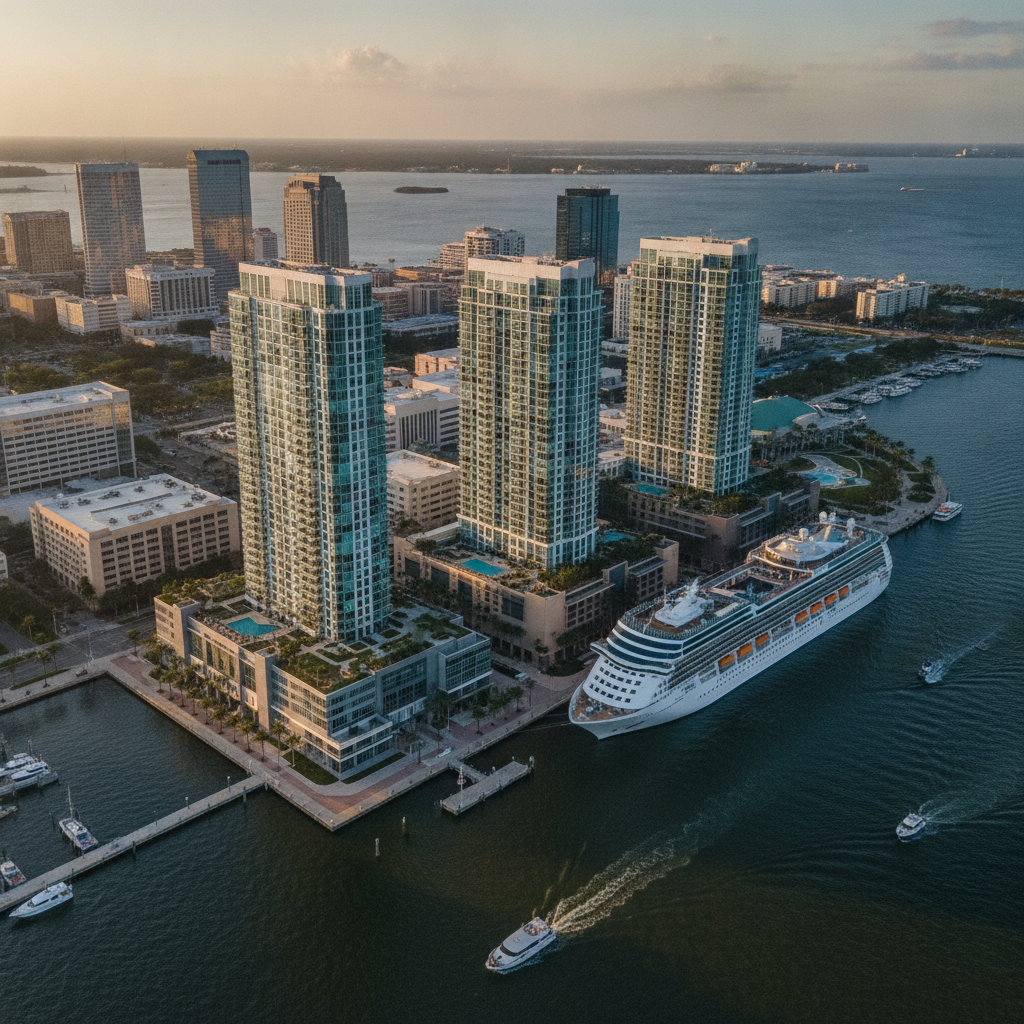
Tampa Channelside was historically a working port and industrial corridor. Over the past two decades, it has transformed into one of Tampa's most dynamic mixed-use districts, anchored by developments that combine residential towers with retail, dining, and entertainment. Today, Tampa Channelside sits at the intersection of downtown Tampa's business core, the Tampa Riverwalk, Water Street Tampa, and Ybor City, making it one of the most centrally located neighborhoods in the entire Tampa Bay region.
Unlike many suburban Tampa Bay communities built around single-family subdivisions, Tampa Channelside is defined by vertical living. Most residential inventory consists of condominium units in buildings constructed around 2008 or later, meaning buyers generally encounter more modern electrical, plumbing, and building systems than in Tampa's older historic districts. This is a meaningful selling point for buyers concerned about aging infrastructure, insurance costs, or major assessments.
Because Tampa Channelside is so close to the Amalie Arena, Sparkman Wharf, the Tampa Convention Center, and the cruise port, it also functions as an entertainment and hospitality hub — which shapes both the lifestyle appeal and the rental dynamics of the neighborhood.
Tampa Channelside Real Estate Market: Prices, Inventory & Trends
Pricing in Tampa Channelside varies widely depending on building age, unit size, floor level, and water views. Generally speaking, entry-level condos — often smaller one-bedroom units in older towers — can be found in the mid-$300,000s, while larger two- and three-bedroom units with balconies and water views frequently exceed $700,000. Penthouse-level and premium waterfront units in Tampa Channelside can climb well past $1 million.
| Unit Type | Typical Size | Approximate Price Range |
|---|---|---|
| Studio / 1-bedroom condo | 500–800 sq ft | $300,000–$450,000 |
| 2-bedroom condo | 1,000–1,400 sq ft | $450,000–$750,000 |
| 3-bedroom / penthouse | 1,600+ sq ft | $800,000–$1,500,000+ |
These ranges are general estimates based on current inventory patterns in Tampa Channelside and can shift with market conditions, so buyers and sellers should always confirm current comparable sales with a local agent before setting a price or making an offer.
Tampa Channelside has generally tracked with the broader downtown Tampa condo market, which has seen steady demand from relocators and investors even as overall Tampa Bay condo inventory has grown. Localized pricing can vary building to building, so it's important to review recent comparable sales rather than relying on neighborhood-wide averages alone.
One factor that distinguishes Tampa Channelside from single-family neighborhoods is the role of HOA fees and condo association reserves. Because nearly all inventory in Tampa Channelside is vertical condo living, buyers need to factor monthly association dues — which can range from a few hundred dollars to well over $1,000 depending on amenities like pools, concierge service, and parking garages — into their total cost of ownership.
Who Lives in Tampa Channelside? Lifestyle & Demographics
Tampa Channelside attracts a distinct demographic compared to many other Tampa Bay neighborhoods. Residents tend to be younger professionals, medical residents working at nearby hospitals, executives who want a short commute to downtown offices, and a growing number of empty nesters and retirees drawn to low-maintenance condo living. The median age of Tampa Channelside residents sits in the low-to-mid 30s, notably younger than many surrounding Tampa Bay communities.
A defining characteristic of Tampa Channelside is its rental-heavy composition. Roughly two-thirds of residents rent rather than own, and only about a quarter of homeowners in the area own their properties free and clear. This tells buyers and investors two important things: first, that rental demand in Tampa Channelside tends to be strong and consistent; and second, that many condo buildings may have higher percentages of investor-owned or renter-occupied units, which can affect financing options through some lenders.
Tampa Channelside has also seen a steady influx of out-of-state and international buyers, consistent with Tampa Bay's broader identity as a Sunbelt relocation hotspot. For relocation clients working with an agent like Kyle Hollister, this matters because Tampa Channelside offers a genuinely urban lifestyle option within the same metro area as more suburban, family-oriented neighborhoods — giving buyers real choice depending on their priorities.
Tampa Channelside vs. Other Tampa Bay Urban Neighborhoods
Buyers considering Tampa Channelside often compare it to nearby urban options like Downtown Tampa's Water Street district, Hyde Park, or St. Petersburg's downtown core. Each offers a different balance of price, lifestyle, and housing stock.
| Neighborhood | Primary Housing Type | General Vibe |
|---|---|---|
| Tampa Channelside | Condo towers, some townhomes | Urban, entertainment-focused, cruise port adjacent |
| Water Street Tampa | Newer luxury condos/apartments | Master-planned, corporate, high-end amenities |
| Hyde Park | Historic single-family homes | Walkable, boutique retail, tree-lined streets |
| Downtown St. Petersburg | Mixed condo and historic homes | Arts-focused, waterfront, boutique dining |
What sets Tampa Channelside apart is its unique combination of entertainment infrastructure (Amalie Arena, Sparkman Wharf), cruise port proximity, and a genuinely younger resident base compared to more historic or family-oriented pockets of Tampa Bay. Buyers who want nightlife, sports events, and a short walk to downtown offices often gravitate toward Tampa Channelside specifically for this mix.
Buying in Tampa Channelside: What First-Time Buyers & Relocators Should Know
For first-time buyers and relocating professionals, purchasing in Tampa Channelside involves a few considerations that differ from a typical single-family home purchase elsewhere in Tampa Bay.
- Review the condo association's financials. Ask for the HOA's budget, reserve study, and any pending special assessments before making an offer in Tampa Channelside — this can reveal hidden costs that affect long-term affordability.
- Confirm rental and pet policies. Many buildings in Tampa Channelside have specific rules around leasing minimums and pet restrictions, which matter if you plan to rent the unit out or relocate with animals.
- Check flood zone and insurance requirements. Given its proximity to the water and port, some Tampa Channelside properties may carry flood insurance requirements that should be factored into your monthly budget.
- Compare parking arrangements. Not all Tampa Channelside condos include deeded parking, and garage or valet access can significantly affect day-to-day convenience.
- Work with an agent who understands both urban condo dynamics and suburban alternatives. Since many relocators aren't sure whether Tampa Channelside or a more suburban Tampa Bay community is the better fit, a data-driven comparison of lifestyle, commute, and long-term resale potential is valuable before committing.
It can be, particularly for buyers who prioritize walkability, low exterior maintenance, and proximity to downtown jobs and entertainment. First-time buyers should weigh HOA fees against the savings on maintenance and yard upkeep compared to a single-family home elsewhere in Tampa Bay.
Kyle Hollister, a Tampa Bay–based Realtor and broker with Hollister Real Estate, works regularly with relocation clients and first-time buyers evaluating urban options like Tampa Channelside alongside more suburban Tampa Bay communities. His analytical, data-driven approach — informed by a background in chemistry and engineering before transitioning into real estate — is particularly well suited to comparing condo association financials, price-per-square-foot trends, and long-term appreciation potential across different Tampa Bay submarkets.
Selling a Condo in Tampa Channelside: What Owners Should Know
Sellers in Tampa Channelside benefit from consistent demand tied to the neighborhood's central location, but standing out among competing condo listings requires strategic positioning. Because Tampa Channelside has a relatively high proportion of investor-owned and rental units, buyers touring the market often compare multiple similar floor plans within the same building or nearby towers — making differentiation important.
Key factors that influence a successful sale in Tampa Channelside include:
- Building reputation and amenities: Buyers often research a building's reserve fund health and amenity quality before touring, so having this information ready can speed up negotiations.
- View and floor level: Units with unobstructed water or skyline views in Tampa Channelside typically command a premium over lower-floor or interior-facing units.
- Presentation and staging: Given the younger, design-conscious buyer pool common in Tampa Channelside, clean, modern staging tends to resonate more than traditional decor.
- Pricing relative to recent comparable sales: Because condo pricing in Tampa Channelside can vary significantly building to building, pulling recent comps from the same or similar towers is more reliable than citywide averages.
Sellers weighing whether to list now or wait should also consider seasonal buyer activity, mortgage rate trends, and how much new condo inventory is coming online nearby, since new construction can shift buyer attention within the broader Tampa Channelside and downtown Tampa market.
Is Tampa Channelside Right for You? Weighing the Pros and Cons
Not every buyer or seller is suited to a dense, condo-dominant neighborhood like Tampa Channelside. Here's a balanced look at what tends to work well — and what doesn't — for different buyer profiles.
| Consideration | Pros of Tampa Channelside | Potential Drawbacks |
|---|---|---|
| Commute | Walkable to downtown Tampa jobs | Limited if your job is in the suburbs |
| Maintenance | Low exterior upkeep, building-managed | Ongoing HOA fees regardless of usage |
| Lifestyle | Nightlife, sports venues, waterfront dining | Can be noisier than suburban settings |
| Space | Modern, efficient layouts | Less square footage than comparable suburban homes |
| Investment | Strong rental demand | Condo financing rules can be stricter |
For buyers who value convenience, walkability, and an active social scene, Tampa Channelside is likely to be a strong fit. For those prioritizing yard space, school district considerations, or lower monthly fees, a suburban Tampa Bay neighborhood may be a better match — and that's exactly the kind of comparison an experienced Tampa Bay agent can help walk through in detail.
Frequently Asked Questions
What is Tampa Channelside known for?
Tampa Channelside is known for its condo towers, waterfront promenade, proximity to the cruise port, and entertainment venues like Amalie Arena and Sparkman Wharf, making it one of Tampa's most walkable urban neighborhoods.
Is Tampa Channelside the same as the Channel District?
Yes, Tampa Channelside and the Channel District refer to the same neighborhood just east of downtown Tampa, and the terms are used interchangeably in real estate listings and local conversation.
How much do condos cost in Tampa Channelside?
Condo prices in Tampa Channelside generally range from the mid-$300,000s for smaller units to over $1 million for larger, water-view, or penthouse-level residences, depending on building age and amenities.
Is Tampa Channelside a good investment for rental property?
Tampa Channelside has historically shown strong rental demand given its high renter population and proximity to downtown employment, entertainment, and the cruise port, though investors should confirm each building's specific rental policies before purchasing.
What is the average age of buildings in Tampa Channelside?
Most residential buildings in Tampa Channelside were constructed around 2008, meaning the majority of the neighborhood's condo stock features relatively modern construction compared with many older Tampa neighborhoods.
Tampa Channelside continues to evolve as one of Tampa Bay's most dynamic urban neighborhoods, offering a lifestyle that's hard to replicate in more traditional suburban settings. Whether you're weighing a move into Tampa Channelside as a first-time buyer, comparing it against other Tampa Bay urban options as a relocating professional, or preparing to list a condo you already own there, having current, accurate market context matters more than ever in a neighborhood where pricing can shift building by building.
If you're exploring buying or selling in Tampa Channelside — or trying to decide whether this neighborhood or another part of Tampa Bay fits your goals — Kyle Hollister can walk you through current listings, building-specific data, and a strategy tailored to your timeline. Reach out today to start the conversation about your next move in Tampa Channelside.