What Is a Real Estate Short Sale Mean? Tampa Guide
November 14, 2026 · 13 min read

If you've spotted a Tampa Bay listing marked "short sale" and wondered what is a real estate short sale mean for your purchase, you're not alone. Short sales confuse even experienced homebuyers because the process looks like a normal transaction on the surface but operates under completely different rules behind the scenes. In this guide, Kyle Hollister breaks down exactly what a short sale is, how the approval process works, and what Tampa Bay buyers and sellers need to know before signing a contract.
TL;DR — The Bottom Line
What is a real estate short sale mean in plain terms? It's a home sale where the property sells for less than the amount owed on the mortgage, and the lender agrees in writing to accept the shortfall instead of pushing the home toward foreclosure. For Tampa Bay buyers, short sales can mean below-market pricing opportunities, but they also come with lender-controlled timelines, "as-is" condition, and no guarantee of closing until every lienholder signs off.
Quick Facts
- Definition: A sale approved by the lender for less than the total mortgage balance owed
- Who approves it: The mortgage lender and any additional lienholders — not the seller alone
- Typical timeline: Several weeks to several months for lender approval
- Property condition: Almost always sold "as-is," with limited or no seller repairs
- Buyer protection: Standard inspection and financing contingencies still apply, but deadlines must be managed carefully
- Seller proceeds: The seller typically receives no profit; the lender absorbs the loss
What Is a Real Estate Short Sale Mean? A Clear Definition
So what is a real estate short sale mean in practical terms? It means the homeowner owes more than the house is currently worth, and the only way to sell without foreclosure is to get the bank's permission to accept less money than the loan balance. The seller doesn't pocket the difference — it's simply forgiven, reported to the IRS as income in some cases, or converted into a repayment arrangement, depending on the lender's policies.
For buyers researching what is a real estate short sale mean before writing an offer, the key takeaway is this: the seller's signature on your contract is only the first step. The lender — sometimes multiple lenders if there's a second mortgage, HELOC, HOA lien, or tax lien — must independently review and approve the sale price and terms before anything moves to closing.
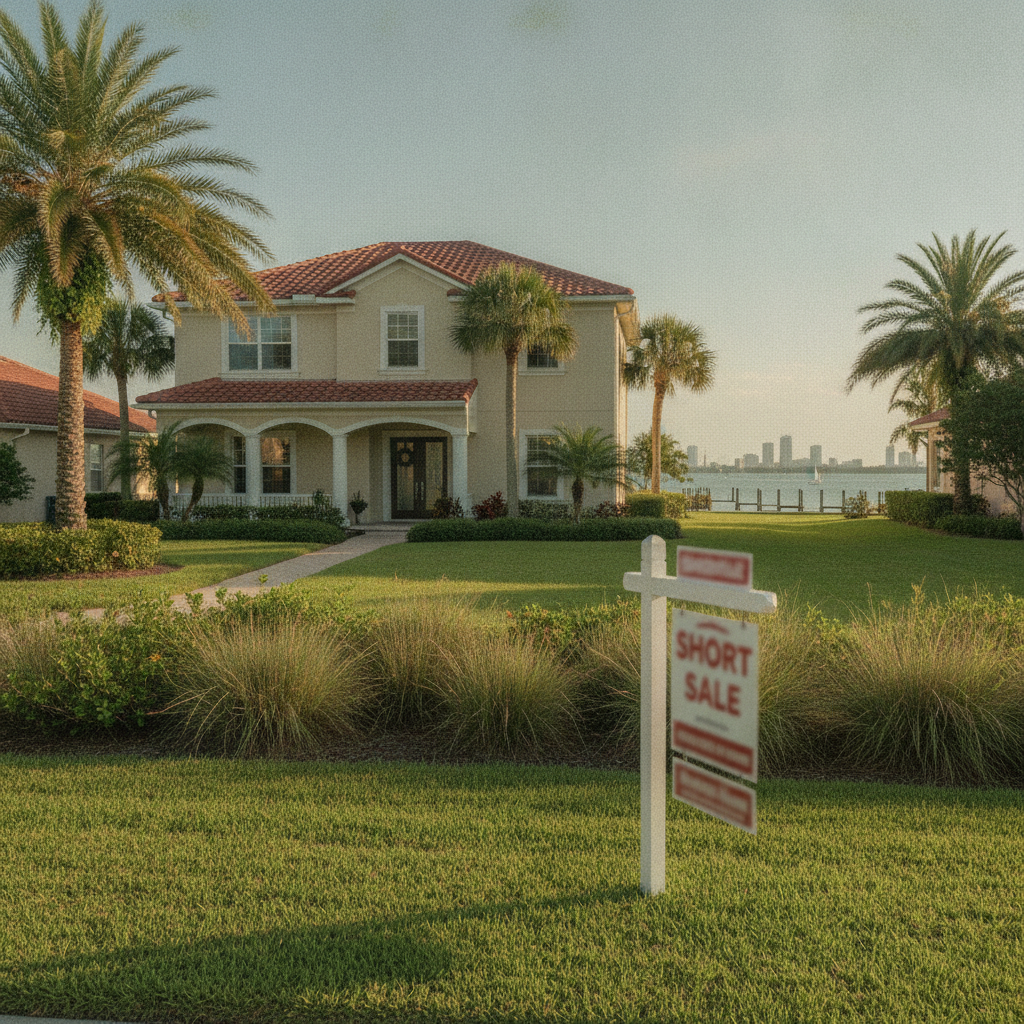
How Does a Short Sale Work? The Step-by-Step Process
Once you understand what is a real estate short sale mean at a basic level, it helps to see the actual mechanics. Here's how a typical Tampa Bay short sale unfolds from listing to closing:
- The seller proves financial hardship. Job loss, divorce, medical bills, relocation, or an unaffordable mortgage payment are common triggers. The lender requires documentation before considering a short sale at all.
- The lender reviews debt versus property value. The bank compares expected sale proceeds against the mortgage payoff, accrued interest, legal fees, back taxes, HOA or condo assessments, commissions, and closing costs.
- The home is listed and marketed. Most lenders require an active listing agreement and a signed purchase contract before they'll open a full file review — they rarely pre-approve a sale price before an offer exists.
- The buyer's offer is submitted as a complete package. This typically includes the purchase contract, proof of funds or mortgage preapproval, a market valuation (broker price opinion or appraisal), an estimated settlement statement, the seller's hardship letter, and financial records.
- The lender evaluates and responds. It can approve the offer, reject it, counter with a higher price, or add conditions. If there's a second mortgage, HELOC, HOA lien, judgment, or tax lien, each additional lienholder may need to approve separately.
- Closing only happens after written approval. The approval letter specifies the minimum acceptable sale price, allowable closing costs, any seller contribution, and the deadline by which the sale must close.
Each of these steps adds time. Buyers who understand what is a real estate short sale mean from a process standpoint go in with realistic expectations about pacing rather than assuming a normal 30-day close.
What a Real Estate Short Sale Means for Tampa Bay Buyers
For buyers actively searching Tampa Bay listings, grasping what is a real estate short sale mean for your specific purchase comes down to weighing real advantages against real risks.
Potential Advantages
- Possible pricing discount: Lenders sometimes accept less than the seller's total debt, though the approved price is still anchored to market value, not simply whatever the seller owes.
- Less buyer competition: Short sales often attract fewer offers because of the added uncertainty and longer timeline, which can work in a patient buyer's favor.
- Opportunity in a shifting market: Tampa Bay inventory and foreclosure-related activity have increased from pandemic-era lows as the broader market has become more balanced, creating more short-sale opportunities than in recent years.
- Extra time for due diligence: The lender review period, while frustrating, can give buyers time to line up financing, inspections, and insurance quotes — provided contract deadlines are tracked carefully.
Major Risks to Weigh
- No guaranteed closing: The seller cannot unilaterally accept your offer — the lender holds final authority, and deals fall through regularly.
- Unpredictable timeline: Approval can take weeks or several months, particularly when multiple liens or incomplete paperwork are involved.
- "As-is" condition: Financially distressed sellers usually can't afford repairs, so buyers inherit deferred maintenance.
- Upfront costs without certainty: You may pay for inspections, appraisals, and loan processing before knowing if the lender will approve your offer. In Tampa Bay's older and coastal homes, roof age, wind mitigation, electrical systems, and flood insurance eligibility deserve early scrutiny.
- Possible renegotiation: The lender can request "highest and best" offers or reject an agreed price if a fresh valuation suggests the home is worth more.
It means the seller owes more on the mortgage than the home is likely to sell for, and the lender must approve the final sale price in writing before the transaction can close. Treat the listed price as a starting point for negotiation, not a confirmed number.
Short Sale vs. Foreclosure vs. Traditional Sale: Key Differences
Now that you know what is a real estate short sale mean on its own, it helps to compare it against the two alternatives buyers frequently confuse it with.
| Feature | Short Sale | Foreclosure | Traditional Sale |
|---|---|---|---|
| Who controls the price | Lender approves final price | Lender or trustee sets auction/REO terms | Seller sets and accepts price |
| Timeline to close | Weeks to months (approval-dependent) | Varies; often fast once bank-owned | Typically 30-45 days |
| Property condition | As-is, seller may still occupy | As-is, often vacant and neglected | Negotiable repairs and credits |
| Seller cooperation | Seller actively involved and must agree | Seller often already out of the picture | Seller fully engaged |
| Closing certainty | Low until lender approval is written | Can be higher once bank-owned | High once contingencies clear |
Understanding this comparison reinforces what is a real estate short sale mean versus a bank-owned foreclosure: in a short sale, the original homeowner is still the seller of record, whereas in foreclosure, the bank typically already owns the property outright.
Why Short Sales Matter in the Tampa Bay Market Right Now
Tampa Bay's housing market has shifted from the frenzied bidding wars of a few years ago toward a more balanced environment, with rising inventory and more price adjustments across several submarkets. That shift is exactly why understanding what is a real estate short sale mean matters more today than it did during the peak seller's market, when distressed sales were rare. As carrying costs — insurance, property taxes, and HOA assessments — climb for some Tampa Bay homeowners, short sales and pre-foreclosure activity have ticked up in pockets of the region, giving prepared buyers more opportunities to consider.
This is a central part of what is a real estate short sale mean for anyone expecting a dramatic deal: the lender's goal is to minimize its own loss, which means aggressive lowball offers are frequently countered or rejected outright.
Buyer Due Diligence: What to Check Before Making an Offer
Before you can act confidently on what is a real estate short sale mean for your purchase, work through this checklist:
- Confirm lender eligibility: Get mortgage preapproval and confirm your lender will finance a short-sale purchase with its longer, less predictable timeline.
- Ask about the lien structure: Find out whether there's a single mortgage or multiple liens (second mortgage, HELOC, HOA, tax lien, judgment), since each additional lienholder adds delay and risk.
- Request seller disclosures anyway: Even in distressed sales, Florida law generally still requires disclosure of known material defects — ask your agent to confirm what's been provided.
- Budget for inspections upfront: Because the home is sold as-is, a full home inspection, four-point inspection, wind mitigation report, and roof certification are essential, especially for coastal or older Tampa Bay properties.
- Check insurance eligibility early: Florida's insurance market is tight; confirm you can secure homeowners and flood coverage before you're deep into a lender approval you can't back out of cleanly.
- Clarify contract deadlines: Negotiate financing and inspection contingencies that account for extended lender review timelines so you aren't forced to release deposits prematurely.
- Review the title report closely: Confirm all liens will be satisfied or released at or before closing — an unresolved lien can derail the deal even after lender approval.
Generally yes, if your contract includes a lender-approval contingency with a defined deadline. Work with an experienced agent, like Kyle Hollister, to structure contingencies that protect your deposit while the bank's review drags on.
Working with an agent who has handled distressed transactions in the Tampa Bay area can shorten the learning curve considerably. Kyle Hollister helps buyers evaluate short-sale listings realistically — separating true opportunities from deals that only look like bargains on paper.
Frequently Asked Questions About Short Sales
What is a real estate short sale mean in Florida specifically?
It means the same thing statewide: the home's sale price is less than the outstanding mortgage balance, and the lender must formally approve the shortfall before the deal can close. Florida's foreclosure process and homestead protections can influence how quickly a seller pursues a short sale instead of letting foreclosure proceed.
How long does a short sale take to close?
Most short sales take anywhere from six weeks to several months, depending on how many lienholders must approve the sale and how complete the buyer's offer package is when submitted.
Is buying a short sale a good deal?
It can be, but it's not automatic. Because lenders price approvals near current market value, buyers should evaluate a short sale the same way they'd evaluate any listing — on location, condition, and comparable sales — rather than assuming a built-in discount.
What happens to the seller's remaining debt after a short sale?
The lender's approval letter typically specifies whether the remaining balance is forgiven, pursued through a deficiency judgment, or converted into a separate repayment plan. This varies by lender and by state law, so sellers should review the letter carefully with an attorney or tax professional.
Do I need a special type of financing to buy a short sale?
No special loan product is required, but your lender needs to be comfortable with extended closing timelines and an as-is appraisal. Confirm with your loan officer that your preapproval accounts for potential delays before submitting an offer.
Final Thoughts: Is a Short Sale Right for You?
Now that you fully understand what is a real estate short sale mean — from lender approval mechanics to the real trade-offs Tampa Bay buyers face — you're in a far stronger position to decide whether to pursue one. Short sales reward patience, thorough due diligence, and realistic price expectations. They punish buyers who assume an easy bargain or a quick close. If you're weighing a short sale purchase, an experienced local advocate can help you separate genuine opportunity from unnecessary risk.
Ready to explore short sale and traditional listings across Tampa Bay with an agent who understands the full picture? Visit Kyle Hollister's Tampa Bay real estate team to start the conversation about your next move.